Introduction
Knee pain can turn simple, everyday movements such as walking across a room, climbing a flight of stairs, or getting up from a chair into painful daily challenges. When knee discomfort begins to limit your mobility and independence, finding the right medical care becomes essential. However, with so many doctors, hospitals, and treatment paths available today, knowing where to start can feel overwhelming.
Choosing the right knee specialist, finding a well-equipped hospital, and picking the most suitable treatment plan are critical steps that directly influence your comfort, safety, and long-term recovery. This comprehensive guide from KNEEHOSPITALS will walk you through everything you need to know to compare your options and make a safe, confident choice for your joint health.
Why Comparing Knee Doctors, Hospitals, and Treatment Options Matters
When dealing with chronic joint pain, it is completely natural to want a quick fix and jump into the first option you find. However, skipping proper research can lead to unnecessary confusion, prolonged recovery timelines, and unpredictable outcomes.
A thoughtful comparison helps you evaluate several vital areas:
- Treatment Quality: Ensuring the care you receive adheres to high medical and orthopedic standards.
- Doctor Experience: Finding a specialist who deeply understands the mechanics of the knee joint.
- Hospital Facilities: Confirming the facility has advanced tools designed specifically for joint surgeries and rehabilitation.
- Available Treatment Methods: Exploring whether lifestyle changes, physical therapy, or joint replacement surgery is best suited for your condition.
- Patient Safety: Knowing that the clinical team follows strict hygiene and risk-reduction protocols.
- Recovery Support: Understanding what healing and rehabilitation will look like so you can plan ahead.
Taking the time to compare replaces anxiety with clarity, helping you make choices that support an active, pain-free future.
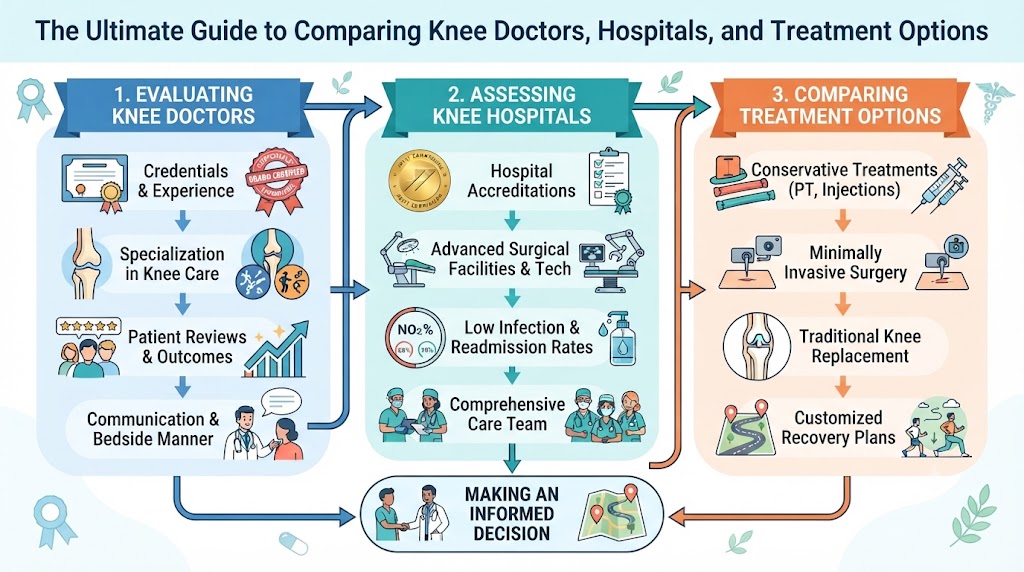
How to Compare Knee Doctors
The knee is a complex weight-bearing joint, and caring for it requires precise medical expertise. Evaluating a physician goes beyond looking at their basic credentials.
Doctor Experience and Specialization
An orthopedic surgeon or specialist who focuses heavily on knee care brings a level of skill that general practitioners cannot match.
- Years of experience: Check how long the specialist has been actively practicing orthopedic care.
- Knee treatment expertise: Ensure their daily focus centers heavily on knee preservation, ligament repair, or joint replacements.
- Experience with similar conditions: Knowing your doctor has successfully treated patients with a history similar to yours builds immense trust.
- Knowledge of modern treatment methods: Look for a specialist who stays updated on minimally invasive techniques and advanced recovery protocols.
Qualifications and Medical Training
Review where the specialist completed their medical education, orthopedic residency, and specialized joint fellowships. Board certifications and professional memberships show that the doctor meets rigorous industry standards.
Treatment Approach and Patient Communication
A great knee doctor looks at your lifestyle, age, and personal goals before making a recommendation. Look for a specialist who listens patiently, explains your diagnosis in plain English, outlines all available choices, and welcomes your questions without rushing.
Patient Outcomes and Experience
Reading about other patients’ journeys can give you great insight into a doctor’s bedside manner, clarity of communication, and the overall success of their treatment plans.
How to Compare Knee Hospitals
Not all hospitals are equipped to provide comprehensive orthopedic care. Evaluating the facility ensures you receive treatment in a safe, supportive environment.
Hospital Reputation and Quality Standards
A trustworthy hospital has a strong track record of safety, cleanliness, and ethical patient care. Look for facilities that hold recognized healthcare accreditations and maintain high quality standards.
Knee Treatment Facilities and Technology
Modern orthopedic medicine relies heavily on advanced infrastructure. Check if the hospital features:
- Advanced diagnostic tools like high-resolution imaging to evaluate joint wear
- Sterile, advanced operating rooms equipped for orthopedic procedures
- Specialized orthopedic units designed for post-surgery monitoring
- Reliable emergency support systems
Orthopedic Care Team
Great joint care requires a collaborative team. Check if the hospital brings together orthopedic surgeons, specialized nurses, physical therapists, and pain management experts who work together on your recovery plan.
Follow-Up and Rehabilitation Services
Healing from a knee procedure requires structured rehabilitation. Look for hospitals that offer dedicated physical therapy support, clear post-treatment guidelines, and structured follow-up consultations.
How to Compare Knee Treatment Options
Understanding your condition and the treatments available helps you become an active partner in your healthcare decisions.
Understanding Knee Conditions
Joint care depends heavily on diagnosing the root cause of your pain. Common reasons for seeking care include:
- Knee arthritis: Wear and tear of the joint cartilage causing stiffness and pain.
- Ligament injuries: Tears or strains resulting from sports, accidents, or sudden movements.
- Joint damage: Structural wear affecting smooth movement.
- Mobility problems: Stiffness that limits your ability to walk or bend comfortably.
Different Knee Treatment Approaches
Knee care covers a wide spectrum of possibilities. Depending on your diagnosis, your care plan may include:
- Lifestyle changes: Weight management and activity modifications to reduce joint stress.
- Physical therapy: Targeted exercises to strengthen the muscles surrounding the knee joint.
- Medication support: Short-term anti-inflammatory medications or joint injections to manage pain.
- Knee replacement procedures: Advanced surgical options when joint damage is severe.
Always remember that the right treatment depends entirely on your unique diagnosis and professional medical advice.
Treatment Safety and Recovery Expectations
Before committing to any treatment plan, make sure you understand the expected benefits, estimated recovery duration, possible challenges, and long-term outcomes.
Important Factors Before Choosing Knee Care
Doctor Expertise
Always prioritize specialists with a proven history of successfully managing knee conditions. Expertise matters greatly when dealing with major joint mobility.
Hospital Quality
Ensure the facility is clean, well-equipped, and adheres to strict safety protocols to minimize risks during and after your care.
Treatment Cost
Evaluate the full financial picture, including consultation fees, diagnostic tests, treatment procedures, and long-term rehabilitation expenses. Affordable care should never compromise safety.
Location and Accessibility
Consider travel convenience, especially if you will need regular physical therapy sessions or follow-up visits after your initial treatment.
Knee Doctor vs Knee Hospital vs Treatment Comparison Table
| Factor | What to Check | Why It Matters |
|---|---|---|
| Knee Doctor | Experience, specialization, treatment approach | Helps choose the right orthopedic specialist |
| Knee Hospital | Facilities, technology, care quality | Supports safe and effective treatment |
| Knee Treatment | Options, safety, recovery expectations | Helps select suitable care |
Common Mistakes Patients Make While Choosing Knee Care
- Choosing a knee doctor only based on low cost: Opting for the cheapest route can sometimes mean sacrificing quality, safety, or proper rehabilitation support.
- Solution: Balance your budget by prioritizing medical excellence and safety standards first.
- Ignoring specialist experience: Selecting a general practitioner or a doctor without a specific focus on orthopedic joint health.
- Solution: Look specifically for specialists whose daily practice centers around knee and joint care.
- Not researching hospital quality: Overlooking facility standards, cleanliness, and surgical technology.
- Solution: Choose accredited hospitals equipped with dedicated orthopedic units and modern diagnostic tools.
- Selecting treatment without understanding options: Agreeing to a major procedure without exploring conservative alternatives or physical therapy first.
- Solution: Ask your doctor to walk you through all available options, including non-surgical management.
- Forgetting rehabilitation and follow-up care: Focusing only on the main procedure while ignoring the vital physical therapy recovery period.
- Solution: Establish a clear rehabilitation and follow-up plan before starting any major treatment.
Step-by-Step Guide to Choosing the Right Knee Care
Step 1: Understand Your Knee Condition
Obtain a clear diagnosis and learn the basic details of what is causing your joint pain from your medical team.
Step 2: Research Knee Doctors
Look for experienced orthopedic specialists, check their professional background, and read about their treatment philosophy.
Step 3: Evaluate Knee Hospitals
Examine hospital accreditations, technological capabilities, and specialized orthopedic support teams.
Step 4: Compare Treatment Options
Weigh conservative therapies against advanced or surgical interventions with the guidance of your specialist.
Step 5: Make an Informed Decision
Choose the care plan that offers the best balance of safety, doctor expertise, and long-term recovery support.
How KNEEHOSPITALS.COM Helps Patients
Navigating joint care can feel daunting, but you do not have to walk the path alone. KNEEHOSPITALS.COM is designed to simplify this process for patients and families by providing clear, reliable guidance.
- Understanding knee treatment options: Access easy-to-read guides that break down various joint conditions and therapies.
- Learning about knee hospitals: Discover trusted medical centers known for excellence in orthopedic care.
- Exploring doctor and treatment choices: Review structured details about specialists, facilities, and options all in one convenient place.
- Supporting better healthcare decisions: Gain the clarity and confidence required to take control of your health journey.
Benefits of Comparing Knee Care Options
- Better healthcare decisions tailored precisely to your physical needs
- Improved confidence and reduced anxiety about your joint health
- Clear understanding of all available conservative and advanced choices
- Better treatment preparation for recovery, physical therapy, and daily routines
- Reduced confusion through organized, transparent information
- Improved recovery planning from consultation to healing
Frequently Asked Questions (FAQs)
1. Why should patients compare knee doctors before treatment?
Answer: Comparing knee doctors helps you find a specialist with focused expertise in joint care, ensuring a more accurate diagnosis and a personalized treatment plan.
2. What factors should be checked when choosing a knee doctor?
Answer: You should check the doctor’s years of experience, specialized training in orthopedics, treatment approach, and past patient outcomes.
3. How can patients compare knee hospitals?
Answer: Patients can compare hospitals by looking at their official accreditations, specialized orthopedic units, advanced imaging technology, and safety records.
4. Should patients choose knee treatment only based on cost?
Answer: No. While financial planning is essential, choosing treatment based solely on low cost can compromise safety and long-term recovery quality.
5. Why is knee doctor experience important?
Answer: The knee is a critical weight-bearing joint. An experienced specialist knows how to evaluate complex risks and choose the safest, most effective path forward for your mobility.
6. What should patients know before choosing knee treatment?
Answer: Patients should understand their specific diagnosis, explore both non-surgical and surgical options, know the expected recovery timeline, and be aware of any potential risks.
7. Why is rehabilitation important after knee treatment?
Answer: Physical therapy and rehabilitation ensure your knee heals properly, help restore your muscle strength, and allow you to return to normal daily movements safely.
8. How does research help patients choose better knee care options?
Answer: Proper research removes uncertainty, helps you ask the right questions, and ensures you partner with qualified medical professionals for your recovery.
Final Thoughts
Choosing the right knee doctor, hospital, and treatment plan requires careful research and thoughtful consideration. Taking the time to compare your options helps you step forward with confidence and peace of mind on your journey toward a pain-free, active life.
Always prioritize expert experience, safety standards, and structured rehabilitation support over quick fixes. Platforms like KNEEHOSPITALS are here to guide you every step of the way, helping you find clear answers and trusted care so you can focus on what matters most: your health, mobility, and recovery.