Introduction
Navigating joint issues often feels overwhelming when you do not know where to turn for dependable guidance. Many individuals struggle to find a trusted knee specialist who truly understands their specific movement challenges and pain levels. Having access to clear and reliable healthcare information can make a major difference in reducing stress and anxiety. When researching various specialists and medical centers, patients often want to know about doctor credentials, hospital infrastructure, and expected care standards. Platforms like KneeHospitals.com are designed to support this initial healthcare research by simplifying how people explore medical options worldwide. This article will help you understand how to research specialists, evaluate medical facilities, and make informed choices for your knee health journey.
Understanding Knee Specialists
A knee specialist focuses on diagnosing and treating conditions that affect the knee joint and surrounding tissues. People often seek help from these professionals due to persistent knee pain, stiffness, or trouble walking. Specialists assist with a wide range of joint concerns, including everyday wear and tear, sports injuries, ligament tears, and cartilage damage.
Some patients visit these doctors when dealing with long-term arthritis or when preparing for joint replacement surgery. The right professional for your needs depends entirely on your specific symptoms, medical history, and diagnosis. Consulting a qualified expert ensures you receive a proper evaluation rather than relying on guesswork.
Why Choosing the Right Knee Specialist Matters
Selecting a qualified medical expert plays a major role in how well your joint condition is managed. Experience directly influences how accurately a doctor can diagnose complex movement problems.
- Medical Background: Doctors with focused training in orthopedic care understand the intricate mechanics of the knee joint.
- Relevant Case Experience: A specialist who frequently treats conditions similar to yours brings valuable practical insight.
- Clear Communication: Trusted doctors take time to listen to your concerns and explain treatment choices in plain language.
- Comprehensive Support: Quality care involves not just the consultation, but also ongoing follow-up and monitoring.
How Patients Can Research Knee Specialists
Before booking an appointment, gathering background information about a doctor helps build trust and confidence. You can start by checking basic professional details through reliable channels.
- Credentials: Look at the doctor’s formal education, medical licenses, and board certifications.
- Area of Focus: Confirm whether their daily practice centers heavily around knee and orthopedic care.
- Hospital Associations: Check which medical centers the specialist works with for surgeries and advanced care.
- Consultation Style: See if they offer clear ways to ask questions and discuss your personal health goals.
Always gather your past medical records, test scans, and notes about your symptoms before meeting a specialist for the first time.
How KneeHospitals.com Helps Patients Explore Knee Specialists
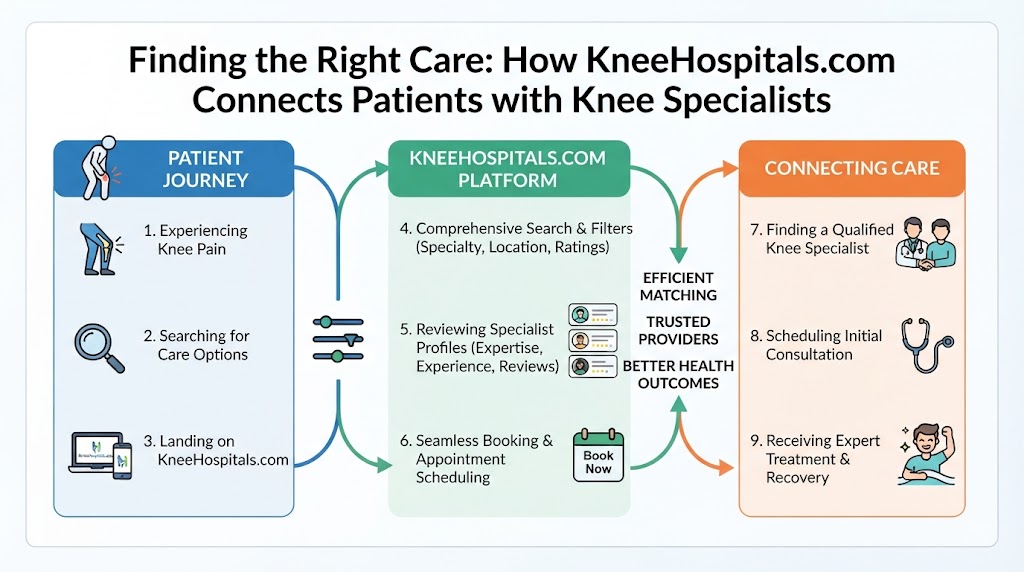
Researching medical care across different regions can take a lot of time and effort. KneeHospitals.com serves as a helpful digital resource designed to make healthcare exploration easier for patients and families. The platform allows users to browse information about various hospitals, learn about different medical professionals, and understand available treatment pathways in one place.
By organizing data clearly, the website helps individuals compare healthcare destinations and learn what to expect during their medical journey. This makes it simpler to prepare for meaningful discussions with doctors and healthcare teams without feeling rushed or confused.
How Patients Can Compare Knee Hospitals
Evaluating medical centers requires looking at several core elements beyond just the outward appearance of the facility.
Hospital Experience
Centers that regularly handle high volumes of orthopedic procedures often have well-established care routines. This institutional familiarity helps streamline surgeries, nursing care, and post-operative monitoring for patients.
Medical Facilities
A well-equipped hospital should offer comprehensive diagnostic tools, modern operating suites, and dedicated physical therapy units. Having imaging services and laboratory testing under one roof helps speed up diagnosis and treatment planning.
Patient Safety
Safety standards are essential for preventing infections and managing unexpected emergencies. Look for hospitals that maintain strict hygiene protocols, have dedicated critical care support, and employ certified nursing staff around the clock.
Patient Support
Dedicated coordination teams make a huge difference, especially for individuals traveling from afar. Helpful hospital services include appointment scheduling, language translation, and organized discharge planning.
| Factor | Knee Specialist | Knee Hospital |
| Experience | Relevant medical experience | Experience in knee and orthopedic care |
| Expertise | Focus on knee-related conditions | Range of orthopedic and knee services |
| Facilities | Works with available medical resources | Provides diagnostic and treatment facilities |
| Patient Care | Consultation and medical guidance | Nursing and hospital support |
| Safety | Care based on the patient’s condition | Hospital safety and emergency systems |
| Follow-Up | Medical guidance after treatment | Ongoing hospital and recovery support |
What Patients Should Check About a Knee Specialist
When reviewing a doctor’s profile, focus on a combination of training, reputation, and patient approach rather than relying on a single detail. Education and specialized fellowships show a strong foundation in orthopedic medicine.
Furthermore, checking how long a specialist has been practicing gives you a better sense of their hands-on expertise. Communication style is equally important; a good doctor makes you feel heard, answers your questions patiently, and involves you in decisions regarding your health.
Common Knee Treatment Options Patients May Explore
Every patient’s joint condition is unique, meaning treatment plans vary widely. Doctors determine the appropriate path based on physical exams, diagnostic scans, and medical history.
- Lifestyle Adjustments: Modifying daily activities and avoiding high-impact movements to reduce joint stress.
- Physical Therapy: Guided exercises designed to strengthen the muscles supporting the knee joint.
- Medical Management: Prescribed medications or joint injections recommended by a physician to manage pain and inflammation.
- Supportive Devices: Using braces or walking aids to improve stability during movement.
- Surgical Interventions: Procedures ranging from minor arthroscopic clean-ups to complete knee replacement surgery when conservative methods are no longer effective.
Preparing for a Knee Specialist Consultation
Coming prepared to your medical appointment helps ensure you make the most of your time with the doctor. Organize your medical history neatly so the specialist can review your background quickly.
- Imaging and Reports: Bring recent X-rays, MRIs, and blood test results.
- Medication List: Write down all prescription drugs, over-the-counter medicines, and supplements you currently take.
- Symptom Journal: Note when your pain started, what makes it worse, and how it affects your daily routine.
- Prior Treatments: Document any previous therapies, physical therapy sessions, or past surgeries.
Questions Patients Can Ask a Knee Specialist
Asking clear questions helps demystify your medical condition and empowers you to participate actively in your care plan.
- What is likely causing my current knee pain and stiffness?
- What diagnostic tests do I need before we decide on treatment?
- Are there non-surgical options we should try first?
- If surgery is needed, what type of procedure do you recommend?
- What are the main risks associated with this treatment plan?
- How long will the typical recovery process take?
- Will physical therapy be required after the procedure?
- How many follow-up visits will I need?
| Area | What Patients Can Check | Why It Matters |
| Specialist | Qualifications and experience | Helps patients understand medical expertise |
| Hospital | Facilities and orthopedic services | Shows what care may be available |
| Treatment | Available treatment choices | Helps patients discuss options with doctors |
| Cost | Medical and related expenses | Supports financial planning |
| Location | Travel and accessibility | Helps with treatment planning |
| Recovery | Rehabilitation and follow-up | Helps patients prepare for recovery |
Cost and Treatment Planning
Understanding the financial aspects of knee care prevents unexpected stress later in the process. Total expenses generally include doctor consultation fees, diagnostic scans, hospital room charges, surgical supplies, and post-operative rehabilitation.
For individuals traveling internationally, additional factors like flights, local transportation, temporary accommodation, and caregiver expenses must also be factored in. Always request a detailed, itemized cost estimate from your chosen hospital or coordinator before committing to any travel or medical schedule.
International Patients and Knee Treatment
Seeking medical care outside your home country requires careful logistical planning. International patients should look for hospitals that routinely assist medical travelers with visa invitation letters, airport pickups, and language support.
It is also important to plan your expected stay duration, ensuring you have enough time for initial healing and clearance from your doctor before taking a long flight home. Coordinate with your local physician beforehand to ensure a smooth transition and continuous follow-up care upon your return.
Common Mistakes Patients Should Avoid
- Focusing Solely on Price: Choosing a hospital purely because it is the cheapest option can compromise safety and quality of care.
- Skipping Specialist Research: Failing to verify a doctor’s actual training and background in knee care.
- Overlooking Facility Standards: Ignoring whether the hospital has proper emergency backup and modern diagnostic tools.
- Trusting Reviews Blindly: Relying exclusively on online testimonials without checking verifiable medical credentials.
- Arriving Unprepared: Going to a consultation without bringing past medical records, scans, or a list of symptoms.
- Staying Silent: Hesitating to ask questions during the doctor’s visit due to nervousness or rushing.
- Neglecting Recovery Planning: Failing to arrange for post-operative rehabilitation and home assistance.
- Acting Without Professional Guidance: Making major health decisions based on internet searches rather than a real medical evaluation.
Benefits of Researching Knee Specialists Before Treatment
Taking the time to investigate your options thoroughly brings several practical advantages:
- Clearer insight into available medical treatments and procedures.
- Greater confidence when discussing health concerns with physicians.
- Ability to compare hospital infrastructure and support services objectively.
- Realistic financial budgeting for medical and travel expenses.
- Smoother organization of post-operative recovery and physical therapy.
How KneeHospitals.com Supports Healthcare Research
KneeHospitals.com acts as a valuable starting point for individuals trying to make sense of orthopedic care options. By providing structured information about hospitals, doctors, and treatment destinations, the platform bridges the gap between patients and reliable medical insights.
Whether you are looking to understand general knee care procedures or comparing hospital facilities across different regions, the website helps streamline your search so you can focus on making informed decisions for your health.
Frequently Asked Questions
1. How can KneeHospitals.com help patients find knee specialists?
The platform brings together structured details about hospitals and medical professionals, allowing users to research and compare their options easily in one place.
2. What should patients check before choosing a knee specialist?
Patients should review the doctor’s formal medical training, years of experience, hospital affiliations, and communication style to ensure a good fit.
3. Why is hospital experience important for knee surgeries?
Hospitals with a high volume of orthopedic procedures typically have refined safety protocols, specialized nursing care, and efficient surgical workflows.
4. What records should I bring to my first knee consultation?
You should bring past imaging scans like X-rays or MRIs, a list of current medications, previous treatment notes, and a summary of your symptoms.
5. Are non-surgical treatments always tried before surgery?
In many cases, doctors recommend conservative options like physical therapy, lifestyle changes, and medications before considering surgical interventions.
6. What factors influence the total cost of knee treatment?
Costs depend on the chosen hospital, specialist fees, diagnostic tests, surgical requirements, length of stay, and rehabilitation needs.
7. What should international patients look for when traveling for care?
International patients should check for language assistance, visa support, clear cost estimates, and adequate arrangements for post-operative recovery.
8. How can I prepare my home for recovery after knee treatment?
You can prepare by clearing walkways, setting up a comfortable resting space on the main floor, and ensuring necessary daily items are easily reachable.
9. Why is physical therapy important after a knee procedure?
Physical therapy helps restore joint flexibility, strengthens the surrounding muscles, and supports safe, long-term movement recovery.
10. How do I know if a knee specialist is right for my condition?
A good specialist listens carefully to your concerns, explains medical terms clearly, and outlines a personalized care plan tailored to your health needs.
Final Thoughts
Taking charge of your joint health begins with careful research and a clear understanding of your medical options. Evaluating specialist expertise, hospital infrastructure, and recovery requirements empowers you to approach treatment decisions with greater confidence. Reliable discovery platforms like KneeHospitals.com help simplify this search by organizing essential healthcare information for patients and families worldwide. Remember that every medical journey is unique, and final decisions should always be made in direct consultation with a qualified healthcare professional.