Introduction
Knee pain is a very common issue that can affect people of all ages. It can start after a sports injury, after a fall, or for no clear reason at all. The causes of knee pain can vary widely from person to person. They can range from a simple muscle strain to age-related joint changes. Understanding why your knee hurts is the first step toward feeling better. Recognizing these factors helps you make safe choices about your daily habits and when to seek professional medical advice.
What Causes Knee Pain?
Knee pain can happen because of injury, overuse, age-related changes, joint problems, or other health conditions. The knee joint is a complex structure made of bones, cartilage, ligaments, tendons, and fluid-filled sacs. When any of these parts gets irritated, torn, or overworked, you may feel pain.
Daily activities, sudden twisting movements, and extra body weight can also put stress on the joint. Because every person is different, the exact cause of discomfort can vary greatly.
Common Causes of Knee Pain
Most people experience knee pain due to everyday physical stress or sudden accidents. Understanding these common triggers can help you protect your joints during daily routines.
- Sprains and strains: Overstretching ligaments or muscles often happens during sudden movements.
- Overuse: Repeating the same motion too many times can irritate knee tissues.
- Sports activities: High-impact sports can sometimes cause sudden injuries.
- Falls or sudden twists: Awkward landings can put too much force on the joint.
- Poor movement patterns: Incorrect body mechanics can place extra wear on the knees.
- Age-related changes: Natural wear and tear over time can affect joint cartilage.
- Extra body weight: Carrying extra pounds adds daily stress to the knee joint.
- Repeated bending or kneeling: Jobs or hobbies that require kneeling can strain the knee caps.
Knee Conditions That May Cause Pain
Sometimes, knee pain is linked to specific changes or issues within the joint itself. It is important to remember that not every knee problem comes from a major medical condition. However, doctors often check for these common physical issues:
- Osteoarthritis: Natural wear and tear over time can wear away joint cartilage, causing stiffness and pain.
- Rheumatoid arthritis: An immune system problem can cause painful swelling inside the joint.
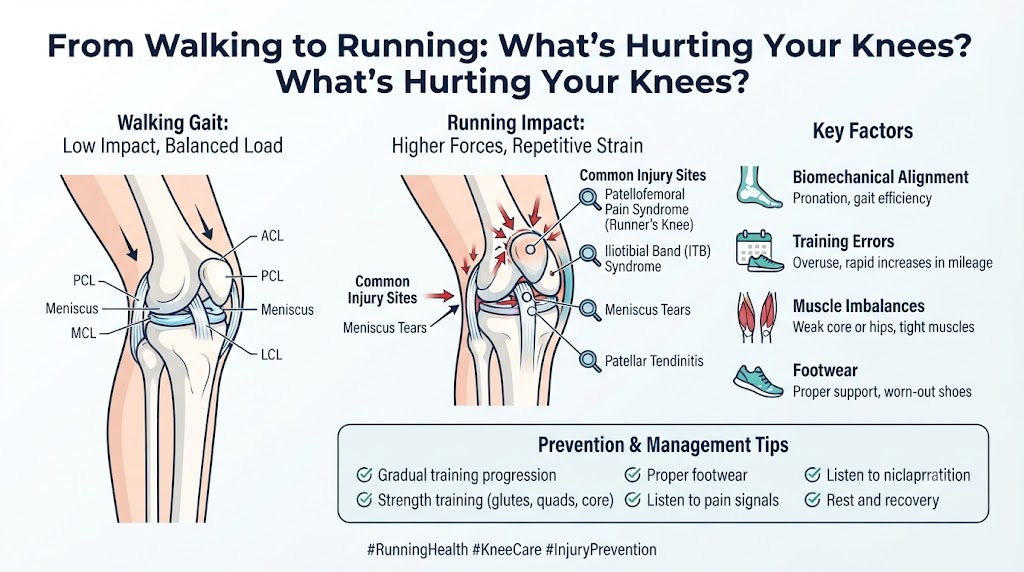
- Meniscus tears: A sudden twist can tear the C-shaped cartilage cushions that absorb shock in the knee.
- ACL or other ligament injuries: Sports moves or direct impacts can tear the bands that stabilize the knee.
- Patellar tendinitis: Overuse can inflame the tendon connecting your kneecap to your shinbone.
- Bursitis: Small fluid sacs that cushion the joint can become irritated and swollen.
- Patellofemoral pain: Pain around the front of the knee can happen from overuse or poor alignment.
- Gout: A buildup of uric acid crystals can cause sudden, painful flare-ups in the joint.
How Daily Habits May Affect Knee Pain
Your everyday habits play a major part in how your joints feel. While these habits do not always guarantee knee pain, they may contribute to discomfort over time.
Long periods of sitting can make your legs stiff and weaken the muscles that support your knees. A lack of physical activity often leads to weak leg muscles, leaving the joint with less natural support. On the other hand, a sudden increase in exercise without proper training can overload the knee tissues.
Repeated stair climbing, frequent kneeling, and heavy physical work can also add daily strain. Maintaining balanced activity levels and healthy habits helps protect your joints.
| Possible Cause | What It Feel Like | When to Get Medical Advice |
|---|---|---|
| Mild strain | Dull ache after physical activity | If pain does not improve with rest |
| Meniscus tear | Sharp pain or catching when twisting | If the knee locks or feels unstable |
| Osteoarthritis | Morning stiffness and pain while walking | If daily activities become difficult |
| Tendinitis | Pain below the kneecap during jumping | If pain persists despite changing habits |
| Serious injury | Sudden severe pain with major swelling | When warning signs or instability appear |
When Should Knee Pain Be Taken Seriously?
Most mild knee pain gets better with rest, ice, and time. However, certain warning signs mean you should seek prompt medical attention. Do not ignore symptoms such as:
- Severe or sudden pain that makes movement impossible
- Major swelling that happens right after an injury
- Inability to put any weight on the affected leg
- Knee instability, meaning the joint feels like it gives out
- Redness, warmth, or fever combined with knee pain
- Numbness or unusual weakness in the lower leg
- Pain that keeps getting worse instead of better
- Knee problems that prevent normal daily activities
These signs may point to a more serious injury or medical issue that needs a doctor’s evaluation.
How Do Doctors Find the Cause of Knee Pain?
When you visit a healthcare professional for ongoing knee pain, they will look for the underlying cause. They typically check your overall symptoms and review your medical history.
The doctor will perform a physical examination to check your range of motion, muscle strength, and joint stability. They will check for swelling, tenderness, and signs of structural damage. In some cases, imaging tests like an X-ray or MRI may be ordered to get a clearer picture of your bones and soft tissues. Keep in mind that advanced scans are not always needed for every routine case of knee pain.
Related Knee Care Resources
- [Placeholder for knee injury prevention guides]
- [Placeholder for physical therapy exercises]
- [Placeholder for patient recovery resources]
When Should a Person See a Doctor?
If your knee pain does not go away with basic self-care, you may need to speak with a healthcare professional. Consider seeking guidance if you experience:
- Knee pain that is severe and limits movement
- Pain that lasts for a long time without relief
- Pain that keeps getting worse over weeks
- The knee is badly swollen or warm to the touch
- Walking becomes difficult or painful
- The knee feels weak, loose, or unstable
- Pain follows a serious injury or accident
- Symptoms interfere with your normal daily life
Professional advice ensures you receive an accurate assessment and a safe care plan.
Common Mistakes to Avoid
When dealing with knee discomfort, certain habits can slow down healing or make things worse. Avoiding these common mistakes can protect your joints:
- Ignoring pain that keeps getting worse over time
- Returning to intense exercise too quickly after a minor injury
- Assuming all knee pain has the exact same cause
- Ignoring visible swelling, locking, or joint instability
- Using treatments or remedies without proper medical advice
- Delaying care after a serious injury or accident
- Relying only on online search results to self-diagnose your symptoms
Simple Knee Pain Checklist
- Where is the knee pain located?
- When did the pain first start?
- Did an injury or sudden twist happen before the pain?
- Does walking or bending make the pain worse?
- Is there visible swelling or bruising around the joint?
- Does the knee feel weak, loose, or unstable?
- Does the knee lock or catch when you move it?
- Is the pain affecting your normal daily activities?
Note: This checklist helps you think about your symptoms, but it does not diagnose a knee condition.
Frequently Asked Questions
What are the most common causes of knee pain? The most common causes include muscle sprains, ligament strains, overuse, sports injuries, and age-related joint wear.
Can overuse cause knee pain? Yes. Repeating the same physical motion too many times without proper rest can irritate knee tissues and cause pain.
Can arthritis cause knee pain? Yes. Conditions like osteoarthritis and rheumatoid arthritis can cause joint stiffness, swelling, and pain while walking.
Can sports injuries cause knee pain? Yes. High-impact sports can cause sudden injuries such as meniscus tears or ligament sprains.
When should knee pain be checked by a doctor? You should see a doctor if your pain is severe, lasts for weeks, causes swelling, or makes walking difficult.
Why does knee pain get worse while walking? Walking puts weight and pressure on the knee joint, which can irritate damaged cartilage, inflamed tendons, or strained muscles.
Does knee pain always mean a serious problem? No. Most mild knee discomfort stems from minor physical strain and improves with rest and self-care.
Can knee pain improve without surgery? Yes. Many common knee issues improve with rest, physical therapy, activity changes, and non-surgical care.
Conclusion
Knee pain can have many possible causes, ranging from simple everyday strains to sports injuries and arthritis. Daily habits can also affect joint comfort over time. While mild aches often improve with rest, certain warning signs require prompt medical attention. Persistent, severe, or unusual knee pain should always be discussed with a qualified healthcare professional to ensure you receive the right evaluation and safe care recommendations.