Introduction
Finding the right medical professional for joint care can sometimes feel overwhelming. When knee pain begins to limit everyday activities—such as walking, climbing stairs, or simply getting out of a chair—patients and their families often look for expert guidance. Knowing where to start, which specialist to trust, and how to evaluate different hospital options can be a complex process.
This is where KneeHospitals.com helps bridge the gap. Designed as a dedicated digital healthcare platform, the website simplifies how individuals explore knee care options, understand different medical pathways, and connect with qualified knee specialists. Having clear, accessible healthcare information empowers patients to take active control of their joint health, review their choices calmly, and make informed decisions alongside qualified medical professionals.
Why Finding the Right Knee Specialist Matters
Joint health is deeply personal. Because every individual experiences mobility concerns differently, a “one-size-fits-all” approach does not work in orthopedic care.
- Different Underlying Causes: Knee discomfort can stem from sports injuries, wear-and-tear arthritis, ligament damage, or meniscus problems. Each condition requires targeted expertise.
- Relevant Experience: Consulting a specialist who frequently handles specific joint issues ensures accurate evaluations and appropriate treatment recommendations.
- Informed Decision-Making: Clear guidance helps patients weigh non-surgical treatments against surgical options, reducing anxiety and building confidence.
- Collaborative Care: Treatment decisions should always be discussed thoroughly with qualified healthcare professionals who understand a patient’s unique medical history and lifestyle goals.
How KneeHospitals.com Connects Patients with Knee Specialists
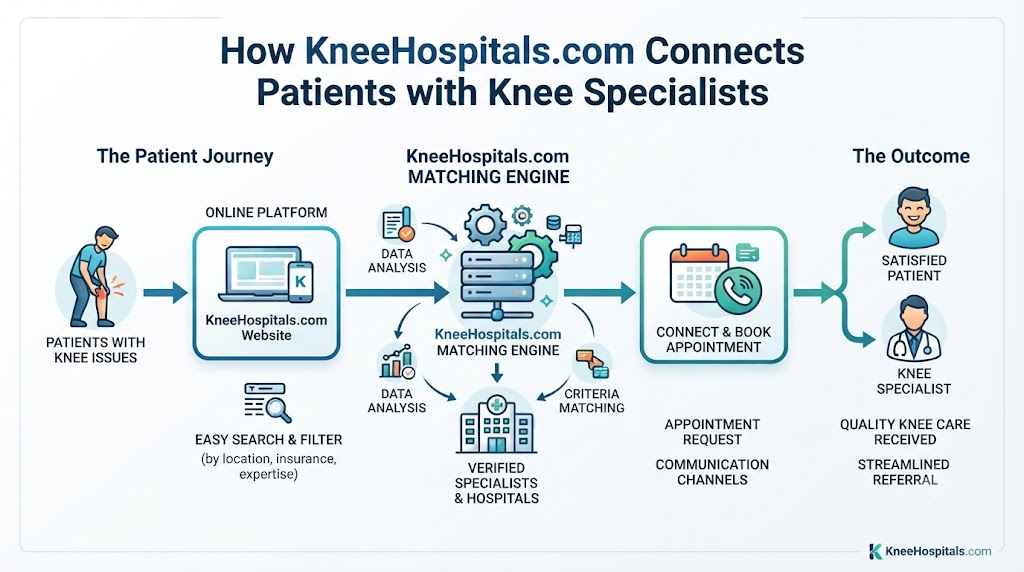
Navigating specialized healthcare should be straightforward. KneeHospitals.com is structured to help patients and caregivers navigate the search process through an organized, patient-centered approach:
- Understanding Patient Needs: The platform helps individuals outline their primary symptoms, concerns, and specific joint care goals.
- Reviewing Healthcare Information: Patients can access clear educational content regarding various knee conditions and treatment options.
- Exploring Care Options: The platform provides insights into available specialist services, diagnostic facilities, and hospital environments.
- Connecting with Specialists: Individuals are guided on how to reach out for consultations, second opinions, or coordinated appointments.
- Supporting Communication: The process encourages open dialogue between patients, families, and medical teams to ensure all questions are answered prior to a visit.
What Does a Knee Specialist Do?
A knee specialist is a medical professional—typically an orthopedic doctor or surgeon—who focuses specifically on diagnosing and treating conditions affecting the knee joint. Patients frequently seek care for issues such as:
- Persistent knee pain that does not improve with rest
- Sports-related injuries from running, pivoting, or contact sports
- Ligament injuries (such as ACL tears) affecting joint stability
- Arthritis-related stiffness, swelling, and cartilage wear
- Meniscus tears causing catching or locking sensations
- Mobility concerns that limit daily independence
- Evaluations for joint replacement surgery when conservative care is no longer effective
A qualified specialist evaluates a patient through a physical examination, review of medical history, and analysis of diagnostic scans (such as X-rays or MRIs) to determine the exact source of discomfort before recommending a customized plan.
What Types of Knee Specialists May Patients Need?
Depending on the nature of the knee problem, patients may cross paths with different types of medical professionals:
- Orthopedic Specialists: General orthopedic doctors who focus on the musculoskeletal system, including bones, joints, ligaments, and tendons.
- Orthopedic Knee Surgeons: Surgeons with specific training in operating on knee joints, ranging from minimally invasive procedures to complex joint reconstructions.
- Sports Medicine Specialists: Experts focused on active individuals and athletes, specializing in non-surgical and surgical management of sports-related joint injuries.
- Joint Replacement Specialists: Surgeons who focus extensively on partial or total knee replacement procedures.
- Physiotherapists and Rehabilitation Experts: Professionals dedicated to post-injury or post-surgery physical therapy to restore strength, flexibility, and normal movement.
Individual treatment paths should always be determined by qualified healthcare providers based on a personal medical evaluation.
The Patient Journey with KneeHospitals.com
Understanding what to expect can make seeking care much easier. The journey typically follows these general steps:
- Step 1: The patient or caregiver identifies knee-related concerns and visits KneeHospitals.com to research symptoms and care options.
- Step 2: Relevant medical background, previous test results, and personal healthcare goals are organized.
- Step 3: The platform helps users explore suitable specialist choices and hospital environments.
- Step 4: The patient initiates contact to schedule an initial consultation or request further information.
- Step 5: A comprehensive consultation takes place with a qualified specialist to discuss diagnosis and potential care pathways.
- Step 6: Follow-up care, rehabilitation planning, or treatment execution is coordinated.
What Information Should Patients Have Ready?
Being prepared helps make the most of a specialist consultation. Patients benefit from gathering key materials beforehand:
- Detailed notes on symptoms (when they started, what makes them worse or better)
- Previous medical and surgical history records
- X-rays, MRI scans, or imaging report discs
- A complete list of current medications and supplements
- Details of prior treatments, injections, or physical therapy sessions
- A written list of questions for the specialist
How to Choose the Right Knee Specialist
Selecting a healthcare professional is a personal decision. Key factors to keep in mind include:
- Area of Expertise: Does the specialist focus specifically on the knee or joint reconstruction?
- Experience: How frequently does the doctor handle conditions or procedures similar to yours?
- Hospital Affiliation: Which medical facilities does the specialist operate out of, and what standards do those facilities maintain?
- Communication Style: Does the specialist listen carefully, explain medical terms simply, and welcome questions?
- Consultation and Follow-up Options: Are ongoing support and structured recovery plans clearly outlined?
How to Choose the Right Knee Hospital
Evaluating a hospital environment is just as important as choosing the doctor. Important considerations include:
- Specialized Orthopedic Infrastructure: Dedicated operating rooms, advanced imaging technology, and clean sterile environments.
- Comprehensive Care Services: Availability of on-site diagnostics, surgical suites, and dedicated rehabilitation or physiotherapy units.
- Quality Standards: Adherence to safety protocols, infection control measures, and patient care standards.
- Location and Accessibility: Proximity for local patients or travel logistics for international individuals.
- Transparent Communication Support: Availability of helpful staff to guide patients through administrative and medical coordination.
How KneeHospitals.com Can Make the Search Easier
Searching for specialized healthcare can often feel fragmented. Platforms like KneeHospitals.com streamline the journey by offering structured information in one place. By organizing specialist profiles, treatment overviews, and hospital insights, the platform helps reduce uncertainty. It allows patients to research at their own pace, organize their questions, and approach consultations with greater clarity and confidence.
What Patients Should Ask a Knee Specialist
Asking clear questions during a consultation fosters a strong partnership with your medical team. Helpful questions to consider include:
- What is the specific diagnosis for my knee condition?
- What are the underlying causes of my joint wear or pain?
- What non-surgical treatment options should we try first?
- If surgery is recommended, what type of procedure is best suited for me?
- What are the potential risks and recovery timelines associated with this treatment?
- What can I expect during post-treatment rehabilitation and physical therapy?
- How long will it take to return to normal daily activities?
Benefits of Connecting with the Right Knee Specialist
Finding the appropriate medical expert provides meaningful advantages throughout your healthcare journey:
- Clarity: A precise diagnosis removes the guesswork from chronic joint pain.
- Tailored Guidance: Treatment plans designed around your lifestyle, age, and health history.
- Efficiency: Direct access to coordinated diagnostics and specialized care teams.
- Confidence: Feeling fully informed about what to expect before, during, and after treatment.
Common Knee Care Challenges for Patients
Many individuals face similar hurdles when seeking joint care for the first time:
- Information Overload: Sifting through conflicting medical advice online.
- Unfamiliar Terminology: Understanding complex medical descriptions of joint damage.
- Logistical Confusion: Determining whether to see a general practitioner, sports physician, or orthopedic surgeon.
- Coordination Stress: Keeping medical records, scans, and notes organized across different visits.
Patients can overcome these challenges by relying on trusted educational resources, keeping structured health logs, and using platforms that organize specialist options clearly.
Preparing for a Knee Consultation
Adequate preparation ensures a productive meeting with your physician. Consider taking these steps prior to your visit:
- Compile all past medical notes, discharge summaries, and clinic letters.
- Store physical or digital copies of recent X-rays and MRI scans.
- Write down a clear summary of your symptoms and how they impact your day-to-day life.
- Bring a trusted family member or caregiver to help take notes and remember important discussion points.
How Technology is Changing Patient and Knee Specialist Connections
Modern digital healthcare tools have transformed how patients connect with medical professionals. Online appointment scheduling, digital medical record sharing, and telehealth consultations make it easier to initiate contact with specialists across different locations. These advancements reduce travel burdens for initial evaluations, facilitate second opinions, and help patients gather necessary health insights before stepping into a clinic.
Why Clear Knee Care Guidance Matters
Clear guidance acts as a compass for patients navigating unfamiliar medical landscapes. When individuals have access to transparent, simple, and honest healthcare information, they can evaluate choices objectively. It eliminates fear-based decision-making, promotes active collaboration with doctors, and ensures that every step taken aligns with the patient’s personal health goals.
Frequently Asked Questions
How does KneeHospitals.com connect patients with knee specialists?
KneeHospitals.com serves as an informative digital healthcare platform that helps patients explore knee conditions, review care options, and understand how to connect with qualified orthopedic specialists and treatment centers.
How can I find a knee specialist through KneeHospitals.com?
You can use the platform to review educational guides, explore specialist categories, and access information designed to help you locate appropriate care based on your specific joint concerns.
What information should I share before a knee consultation?
It is helpful to share your primary symptoms, medical history, past treatments, current medications, and any relevant imaging reports like X-rays or MRIs.
How should I choose the right knee specialist?
Look at the specialist’s specific area of expertise, professional experience, hospital associations, and communication style to ensure they match your comfort level and healthcare needs.
What should I look for in a knee hospital?
Key factors include specialized orthopedic infrastructure, advanced diagnostic and surgical facilities, safety protocols, cleanliness, and supportive patient care services.
What questions should I ask a knee specialist?
Ask about your exact diagnosis, non-surgical alternatives, surgical indications (if applicable), expected recovery milestones, potential risks, and required rehabilitation steps.
What medical records should I take to a knee consultation?
Bring past doctor notes, imaging films or digital scan discs, laboratory test results, and a list of all medications you are currently taking.
What types of specialists treat knee problems?
Common specialists include orthopedic doctors, knee surgeons, sports medicine physicians, joint replacement experts, and physical rehabilitation therapists.
How can patients prepare for a knee consultation?
Gather your medical history, organize your scans, write down a detailed symptom timeline, and prepare a written list of questions to discuss with the doctor.
How can KneeHospitals.com make finding knee care easier?
By centralizing reliable educational content and structured guidance, the platform reduces confusion, simplifies research, and helps patients prepare effectively for their medical consultations.
Conclusion
Navigating knee pain and exploring treatment options is a journey that deserves patience, reliable information, and expert support. Understanding your choices and connecting with the right medical professional can profoundly influence your mobility and overall quality of life.
Platforms like KneeHospitals.com are designed to make this exploration simpler, helping patients find clarity, evaluate specialists, and take the first steps toward informed joint care. To explore available resources, learn more about treatment pathways, or take the next step in your joint health journey, visit KneeHospitals.com today.