Introduction
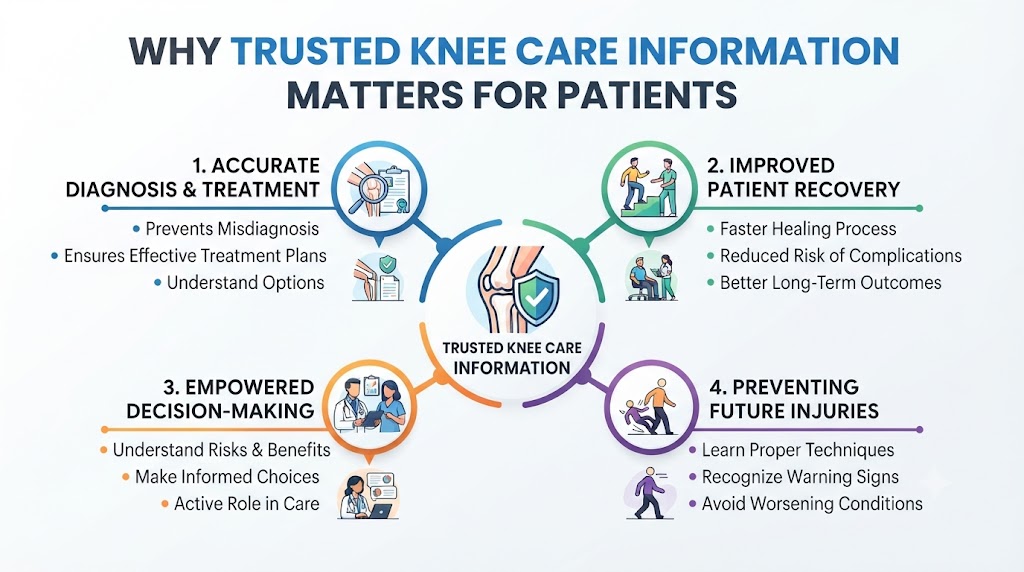
When knee pain begins to affect daily life, whether it is a sharp twinge while climbing stairs or a dull ache after a long walk, many people immediately turn to the internet for answers. This search for healthcare information is entirely natural. Patients and their families want to understand what might be happening, what treatment options exist, which knee hospitals are reputable, and what kind of recovery to expect.
However, looking for health information online can quickly become overwhelming. A quick search can yield thousands of conflicting opinions, heavily marketed treatments, and confusing medical jargon. Not all health information found online is equally reliable, and distinguishing between accurate medical facts and exaggerated claims can be difficult.
Patients need clear, accurate information before making healthcare decisions. Making choices about orthopedic care, surgery, or rehabilitation is a significant step that impacts mobility and overall well-being. While online resources are helpful for initial learning, they cannot replace professional medical advice. A qualified doctor remains essential for an accurate diagnosis and a personalized treatment plan.
Platforms like KNEEHOSPITALS.COM aim to bridge this gap by helping patients research knee hospitals, specialists, treatment options, and medical travel information in a structured and transparent manner. Understanding why trusted information matters is the first step toward making informed, confident choices about your health.
What Does Trusted Knee Care Information Mean?
Understanding what constitutes reliable guidance is essential before diving into research. Trusted knee care information goes beyond simple blog posts or social media advice. It represents accurate, transparent, and verified details that help patients make informed choices.
Key Characteristics of Reliable Knee Care Information
- Accurate Information: Facts based on established orthopedic principles rather than unproven trends or promotional claims.
- Clear Explanations: Complex medical concepts broken down into simple, easy-to-understand language so patients can comprehend their condition.
- Reliable Healthcare Sources: Content supported by medical professionals, reputable orthopedic institutions, and established clinical guidelines.
- Qualified Medical Professionals: Clear details about doctors, their training, and their specific experience in treating knee disorders.
- Up-to-Date Medical Insights: Information that reflects current advancements in knee surgery, physiotherapy, and non-surgical care.
Evaluating Online Health Sources
Patients should exercise caution when reviewing information found online. The internet contains a vast amount of unverified content, ranging from biased advertisements to outdated medical advice. When researching knee pain treatment or knee replacement options, always check who wrote the information, whether the sources are cited, and if the platform maintains a neutral, patient-focused approach rather than trying to sell a specific product or service.
Why Patients Search for Knee Care Information
Knee problems affect people of all ages, from active athletes to older adults experiencing age-related wear and tear. When discomfort arises, individuals naturally look for answers to understand their symptoms.
Common Knee Symptoms and Concerns
- Knee Pain: Discomfort that can range from mild irritation to severe, debilitating pain.
- Swelling and Stiffness: Difficulty bending or straightening the leg, often accompanied by inflammation.
- Difficulty Walking: A feeling of instability or the knee giving out under pressure.
- Knee Injuries: Trauma resulting from sports, falls, or sudden twists.
- Ligament and Meniscus Problems: Structural issues within the knee joint affecting stability and movement.
- Arthritis: Progressive wear of the cartilage inside the joint, leading to chronic discomfort.
Exploring Treatment and Care Options
Beyond understanding symptoms, patients frequently research broader care options. They look into the realities of knee replacement surgery, seek out reputable knee specialists, compare different knee hospitals, and sometimes explore second opinions. International patients also research medical travel options to find specialized care abroad.
It is important to remember that reading about symptoms does not substitute for a medical diagnosis. Knee symptoms often share similar outward signs but can stem from very different underlying causes. A professional assessment by a qualified doctor is always required.
Why Trusted Information Matters Before Choosing Knee Treatment
Making decisions about orthopedic care requires a clear understanding of what lies ahead. Patients who research their conditions thoroughly before speaking with a doctor are often better prepared to ask meaningful questions and take an active role in their healthcare journey.
Understanding Your Options
Knee care is rarely a one-size-fits-all solution. Depending on the diagnosis, age, overall health, and personal lifestyle goals, treatments can vary widely.
- Non-Surgical Options: Many patients benefit greatly from lifestyle changes, weight management, targeted physical therapy, bracing, or medication to manage inflammation.
- Minimally Invasive Procedures: Arthroscopy may be recommended for certain types of internal knee damage, allowing surgeons to diagnose and repair issues with smaller incisions.
- Surgical Options: When joint damage is severe and conservative treatments no longer provide relief, knee replacement surgery may be considered to restore mobility and reduce pain.
Managing Expectations
Understanding the potential benefits, risks, recovery expectations, and follow-up care associated with each treatment helps prevent unpleasant surprises. Knowing that recovery from a surgical procedure takes time, dedication, and consistent physical therapy allows patients to prepare their homes, support systems, and work schedules accordingly. Treatment decisions should always be made collaboratively with a qualified healthcare professional.
How Unreliable Knee Care Information Can Mislead Patients
Relying on inaccurate or biased online content can lead to poor healthcare choices, unnecessary anxiety, and delayed treatment. Recognizing common pitfalls helps patients navigate the digital landscape safely.
Common Misconceptions and Risks
- Misunderstanding Symptoms: Self-diagnosing based on generalized internet searches can lead patients to worry about severe conditions they do not have, or conversely, ignore warning signs of a serious injury.
- Assuming Surgery is Always Needed: Some online sources exaggerate the necessity of surgery, leading patients to believe invasive procedures are their only option when conservative care might suffice.
- Believing Unsupported Claims: Unverified websites often promote “miracle cures” or quick fixes for chronic arthritis that lack scientific backing.
- Trusting Unrealistic Recovery Promises: Claims of instant recovery or pain-free movement within days of surgery can set unrealistic expectations and lead to disappointment.
- Choosing Solely by Online Rankings or Price: Selecting a hospital based purely on flashy online rankings or the lowest price can mean overlooking critical factors like specialist experience, hospital safety standards, and quality of care.
- Delaying Professional Care: Spending weeks trying to self-treat severe knee pain based on blog posts instead of seeing a doctor can worsen the underlying condition.
Patients can avoid these issues by cross-referencing information, looking for balanced educational resources, and relying primarily on advice from their treating physicians.
What Patients Should Check in Knee Care Information
When gathering details about orthopedic care, focusing on specific, verifiable categories helps ensure the information is useful and trustworthy.
Knee Condition Information
Patients should learn about the anatomy of the knee and common conditions affecting it, such as osteoarthritis, ligament tears, or tendonitis. Understanding the basic mechanics of the joint helps make sense of doctor consultations.
Diagnosis Information
Reliable educational resources explain the diagnostic process. This typically includes physical examinations, medical history reviews, and imaging studies such as X-rays or MRIs. Remember that this information is educational; only a doctor can provide a formal diagnosis.
Treatment Information
A thorough overview of treatment should cover a spectrum of possibilities, ranging from rest and physical therapy to injections and surgical interventions. It should outline why different patients require different approaches.
Knee Specialist Information
When researching doctors, patients should look into medical qualifications, board certifications, relevant orthopedic sub-specialties, and specific experience performing procedures like knee arthroscopy or knee replacement.
Knee Hospital Information
Comparing hospitals involves looking at specialized orthopedic departments, advanced surgical technology, sterile operating environments, intensive care support, and nursing standards.
Recovery Information
Recovery timelines vary significantly depending on the procedure, the patient’s age, and their pre-existing health status. Trusted information provides realistic, generalized timelines rather than absolute guarantees.
Cost Information
Financial planning is an important part of healthcare. Reliable resources explain that costs vary depending on the treatment, hospital, location, and individual patient requirements.
How Patients Can Check if Knee Care Information Is Reliable
Navigating health websites requires a critical eye. Patients can protect themselves and make better decisions by following a few simple steps when evaluating online content.
Step-by-Step Verification Guide
- Check the Author and Source: Look for content written or reviewed by medical professionals, or published by established orthopedic institutions and hospitals.
- Look for Evidence-Based Claims: Ensure the information is backed by general medical consensus rather than personal anecdotes or sales pitches.
- Check the Publication Date: Medical guidelines and surgical techniques evolve. Ensure the information you are reading is current and up-to-date.
- Beware of Exaggerated Promises: Be skeptical of websites claiming “guaranteed success,” “risk-free surgery,” or miraculous instant cures.
- Verify Hospital and Specialist Credentials: Cross-reference doctor profiles and hospital accreditations through official medical boards or independent verification bodies.
- Consult a Healthcare Professional: Always treat online research as a preparation tool for a doctor’s visit, never as a replacement for professional medical advice.
Why Knee Specialist Information Matters
The skill, experience, and approach of the orthopedic surgeon play a vital role in the success of any knee treatment. When researching a knee specialist, patients should look beyond simple titles and examine several key factors.
Key Considerations When Researching Specialists
- Medical Qualifications: Verify formal medical degrees, orthopedic residency training, and specialized fellowships in joint reconstruction or sports medicine.
- Relevant Experience: Inquire about how frequently the specialist performs specific procedures, such as total knee replacement or ligament reconstruction.
- Hospital Affiliation: Check which hospitals the specialist operates in and ensure those facilities maintain high safety and clinical standards.
- Communication Style: A good specialist listens to patient concerns, explains treatment options clearly, and encourages questions without rushing the consultation.
- Holistic Treatment Approach: Look for doctors who consider non-surgical therapies before recommending surgery, ensuring the treatment plan truly fits the patient’s needs.
Do not call any doctor “the best” without reliable evidence, as clinical excellence involves many personal and professional dimensions that vary by patient need.
Why Knee Hospital Information Matters
Choosing the right hospital is just as important as choosing the right surgeon. A well-equipped medical facility supports safe procedures, smooth recoveries, and effective post-operative care.
What to Research When Comparing Knee Hospitals
- Specialized Orthopedic Infrastructure: Dedicated orthopedic wards, advanced operating theatres, and sterile environments designed to minimize infection risks.
- Diagnostic Capabilities: Access to high-resolution imaging equipment like MRI and CT scanners for accurate pre-surgical planning.
- Rehabilitation Facilities: On-site physiotherapy departments staffed by trained therapists to guide patients through early mobility exercises.
- Accreditation and Safety Standards: Recognition by recognized health accreditation bodies that evaluate hospital quality and patient safety protocols.
- International Patient Services: For those traveling from afar, assistance with language translation, visa letters, airport transfers, and local accommodation coordination.
Patients should verify all important hospital details directly with the facility or through trusted research platforms before making final decisions.
How KNEEHOSPITALS.COM Can Help Patients
Researching knee care can feel overwhelming when information is scattered across the internet. KNEEHOSPITALS.COM is designed to simplify this process by bringing essential resources together in one place.
The platform presents structured information about knee hospitals, specialized surgeons, treatment options, destinations, consultation steps, surgery costs, and medical travel support. It covers major interventions such as knee replacement, arthroscopy, physiotherapy, and rehabilitation.
Ways the Platform Supports Patients
- Researching Knee Hospitals: Compare facilities based on infrastructure, services, and location.
- Exploring Care Options: Learn about non-surgical care, minimally invasive procedures, and surgical interventions in simple language.
- Learning About Specialists: Review backgrounds and areas of focus for orthopedic professionals.
- Understanding Costs and Travel: Gain insight into how treatment costs are structured and explore guidance for medical travelers.
- Preparing for Consultations: Find helpful questions and checklists to make doctor visits more productive.
KNEEHOSPITALS.COM serves as an educational guide to help patients navigate their healthcare options. It does not replace professional medical advice, diagnosis, or treatment.
Trusted Knee Care Information and Medical Tourism
For many patients around the world, traveling to another city or country for knee treatment offers access to specialized care, advanced technology, or more manageable costs. However, international medical travel requires careful planning and thorough research.
Key Factors for Medical Travelers
- Hospital Quality and Accreditation: Confirming international safety standards and facility certifications.
- Specialist Credentials: Verifying the training and track record of the orthopedic surgeon abroad.
- Continuity of Medical Records: Ensuring complete transfer of medical history, imaging scans, and surgical notes.
- Comprehensive Cost Breakdown: Understanding what is included in travel packages—such as surgery, hospital stay, implants, medications, and local transport.
- Post-Operative Follow-Up: Planning how follow-up care will be managed once the patient returns home, including coordination with local physical therapists.
- Logistics and Support: Organizing visas, flights, suitable accommodation for recovery, and reliable communication channels with the medical team.
Online resources can help initiate this research, but every detail should be confirmed directly with the healthcare provider before making travel commitments.
Why Cost Information Should Be Clear
Navigating the financial aspects of healthcare is a major concern for patients and families. Transparency regarding medical expenses helps prevent unexpected stress during an already challenging time.
Costs vary depending on the treatment, hospital, location, and individual patient requirements. For example, a simple arthroscopic procedure will involve different expenses compared to a total knee replacement requiring specialized surgical implants, extended hospital stays, and intensive post-operative rehabilitation.
Patients should always ask for a detailed estimate that outlines professional fees, hospital charges, diagnostic tests, anesthesia, medication, and physiotherapy. Avoiding vague pricing and seeking clear breakdowns allows for realistic financial planning.
Why Questions and Second Opinions Matter
Taking an active role in your healthcare means asking questions and, when necessary, seeking a second opinion. A reputable doctor will always welcome patient inquiries and support the desire to fully understand a proposed treatment plan.
Important Questions to Ask Your Doctor
- What may be causing my knee problem?
- What diagnostic tests are needed to confirm the issue?
- What treatment options are available for my specific condition?
- Are there non-surgical options we should try first?
- If surgery is recommended, what type is best, and what are the possible risks?
- How long will the recovery process take, and what kind of physical therapy will I need?
- What follow-up care is required after treatment?
- What financial costs should I anticipate for this care plan?
Seeking a second opinion is a standard and healthy part of medical decision-making, particularly before undergoing major orthopedic surgery. It helps patients feel confident and secure in their chosen path.
Preparing for a Knee Consultation
Walking into a specialist consultation prepared can make the appointment much more productive. Organizing your medical history ensures the doctor has all the necessary facts to evaluate your condition accurately.
Patient Consultation Checklist
- Medical Reports: Bring summaries of previous diagnoses or doctor notes related to your knee.
- Imaging Scans: Bring physical copies or digital files of recent X-rays, MRIs, or CT scans, along with their radiologist reports.
- Medication List: Note down all current prescription medications, over-the-counter drugs, and supplements you are taking.
- Previous Treatments: Summarize past physical therapy programs, injections, or other treatments you have tried.
- Symptom Journal: Be ready to describe when your pain started, what makes it worse, and how it affects your daily activities.
- List of Questions: Write down your questions in advance so you do not forget them during the conversation.
- Insurance Details: Bring relevant health insurance documents or policy information if applicable.
Common Mistakes Patients Should Avoid
Navigating knee care research can be tricky. Being aware of common pitfalls helps patients make safer, more rational decisions.
- Trusting Every Website: Assuming all online health content is equally accurate or unbiased.
- Choosing Solely by Online Rank: Selecting a hospital or doctor based purely on internet popularity rather than clinical qualifications.
- Believing Guaranteed Outcomes: Trusting platforms that promise 100% success or pain-free recovery without risks.
- Ignoring Specialist Credentials: Failing to verify a doctor’s board certification and specific orthopedic experience.
- Comparing Only by Price: Choosing the cheapest option without evaluating hospital safety, implant quality, or post-operative care standards.
- Assuming Surgery Is Inevitable: Believing that knee pain always leads to the operating table.
- Skipping Rehabilitation: Underestimating the vital role of physical therapy and follow-up care in achieving a successful recovery.
- Delaying Professional Care: Waiting too long to see a doctor while relying entirely on internet remedies.
How Digital Information Is Changing Knee Care Research
The digital age has transformed how patients approach orthopedic care. Access to information has shifted from word-of-mouth recommendations to global online research. Patients can now review hospital facilities through virtual tours, access digital copies of their imaging scans instantly, consult specialists via telemedicine, and coordinate medical travel across borders with greater ease.
While digital tools make gathering information faster, the core principles of healthcare remain unchanged. Technology supports research and communication, but clinical expertise, human empathy, and personalized medical evaluation remain the true foundation of healing.
Frequently Asked Questions
Why is trusted knee care information important for patients?
Trusted information helps patients understand their conditions, evaluate treatment options realistically, prepare for doctor consultations, and avoid misleading claims found online.
How can patients tell if knee care information is reliable?
Reliable information is supported by qualified medical professionals, backed by evidence-based medicine, up-to-date, and published by reputable healthcare institutions rather than commercial sales sites.
What should patients research before choosing a knee hospital?
Patients should research specialized orthopedic departments, surgeon qualifications, diagnostic equipment, safety standards, infection control protocols, and available rehabilitation services.
Why is it important to check a knee specialist’s experience?
A specialist with specific experience in knee conditions and joint procedures is better equipped to diagnose complex issues and perform surgeries safely and effectively.
Can online knee care information replace a doctor’s consultation?
No. Online information is strictly for educational purposes and cannot replace a professional medical examination, diagnosis, or personalized treatment plan.
What information should I prepare before a knee specialist consultation?
Patients should prepare previous medical reports, recent X-rays or MRI scans, a list of current medications, a symptom summary, insurance details, and a list of questions.
Why should patients understand their knee treatment options?
Understanding options—ranging from physical therapy to arthroscopy or joint replacement—allows patients to participate actively in their care decisions alongside their doctors.
How important is cost information when choosing knee treatment?
Cost information helps with financial planning. Costs vary depending on the treatment, hospital, location, and individual patient requirements.
Why does rehabilitation and follow-up care matter after knee treatment?
Consistent physical therapy and proper follow-up care are essential for regaining joint strength, restoring mobility, and ensuring long-term recovery success.
How can KNEEHOSPITALS.COM help patients research knee care options?
KNEEHOSPITALS.COM provides structured information about knee hospitals, specialists, treatment procedures, medical travel, and cost considerations to support patient research.
Conclusion
Navigating knee pain and exploring treatment options is a journey that requires clarity, patience, and trusted guidance. Reliable information empowers patients and their families to ask the right questions, understand their choices, and approach medical consultations with confidence.
While the internet offers a wealth of resources, it is vital to separate educational insights from unverified claims and to remember that online content can never replace the expertise of a qualified medical professional. Carefully evaluating hospital standards, specialist qualifications, and recovery expectations ensures safer and more informed healthcare decisions.