Introduction
Healthy knees are essential for maintaining the freedom to walk, exercise, and participate in the activities of daily life. When knee function is compromised by injury or chronic conditions, it can significantly impact an individual’s mobility, independence, and overall quality of life. Many patients find it challenging to navigate the complexities of modern orthopedics while searching for reliable medical guidance.
Selecting an experienced orthopedic specialist and a facility equipped for high-quality care is a critical step in the treatment journey. Access to transparent, reliable healthcare information allows patients to compare options and approach their health decisions with greater confidence. Platforms such as KNEEHOSPITALS serve as a resource to help patients understand various knee care options, learn about hospital standards, and grasp the importance of tailored treatment planning.
Understanding Knee Health
The knee is a complex joint that acts as a vital hinge for the body, supporting significant weight while allowing for a wide range of motion. It is composed of several key structures:
- Bones: The femur (thigh bone), tibia (shin bone), and patella (kneecap) form the primary structure.
- Cartilage: Articular cartilage covers the ends of these bones, providing a smooth surface that allows them to glide easily during movement.
- Ligaments: These strong bands of tissue, including the ACL and MCL, connect bones to bones and provide critical stability.
- Tendons: These connect muscles to bones, facilitating the forces needed for movement.
- Muscles: Surrounding the joint, muscles provide the power required for walking, climbing, and jumping.
Because the knee relies on the coordinated function of these components, injury or degeneration in any one area can lead to instability, pain, and reduced mobility.
Common Knee Conditions That Require Specialized Care
Knee Arthritis
Arthritis, particularly osteoarthritis, involves the gradual wear of the cartilage in the knee. This often leads to pain, stiffness, and inflammation, making daily activities more difficult as the condition progresses.
Knee Ligament Injuries
Ligaments provide the “anchors” for the joint. Injuries such as ACL or MCL tears are common, particularly among athletes. These injuries often cause a sensation of the knee “giving way” and require professional assessment to determine the best path forward.
Meniscus Tears
The meniscus is a C-shaped piece of tough, rubbery cartilage that acts as a shock absorber. Tears can occur from sudden twisting motions or long-term wear, often resulting in swelling and locking of the joint.
Knee Fractures
Trauma, such as a fall or impact, can lead to fractures of the kneecap or the bones surrounding the joint. These require immediate medical evaluation to ensure proper alignment and healing.
Patellar Problems
Conditions involving the kneecap, such as patellofemoral pain syndrome, can make it difficult to sit for long periods or climb stairs. These are often related to tracking issues or muscle imbalances.
Knee Tendon Injuries
Overuse or sudden strain can lead to tendonitis or tears. Managing these injuries effectively is crucial for restoring full strength and preventing long-term damage.
Common Symptoms of Knee Problems
Patients experiencing knee concerns often report one or more of the following:
- Persistent Pain: Discomfort that may occur at rest or during activity.
- Swelling: Fluid buildup inside or around the joint.
- Stiffness: Difficulty fully straightening or bending the knee.
- Instability: The feeling that the knee may buckle or give out.
- Mechanical Symptoms: Clicking, popping, or a locking sensation when moving.
- Reduced Mobility: Difficulty with stairs, squatting, or walking long distances.
Why Choosing the Right Knee Hospital Matters
Orthopedic Expertise
The quality of care is deeply connected to the expertise of the medical team. Experienced knee specialists possess the knowledge to distinguish between similar-sounding conditions and create a treatment plan tailored to the patient’s specific health profile.
Advanced Diagnostic Facilities
Modern orthopedics relies on accurate imaging. Hospitals with advanced diagnostic capabilities, such as high-resolution MRI and specialized X-ray services, ensure that the root cause of the pain is clearly identified before any treatment begins.
Treatment Options
A high-quality facility provides a full spectrum of options. This includes non-surgical management, minimally invasive procedures, and, when necessary, advanced surgical techniques.
Rehabilitation Support
Surgery or injury management is only one part of the journey. Robust physical therapy and rehabilitation departments are vital for regaining range of motion, building strength, and returning to daily activities.
How KNEEHOSPITALS.COM Helps Patients Find Trusted Knee Care
The journey toward effective treatment starts with education. KNEEHOSPITALS assists patients by streamlining the process of discovering reliable information.
Understanding Patient Needs
Many patients are unsure how to articulate their concerns to a doctor. This platform helps individuals identify their specific knee-related symptoms and understand the requirements for different types of care.
Exploring Knee Care Options
Patients can learn about what constitutes a high-quality orthopedic facility. This includes understanding the differences between specialized orthopedic centers and general hospitals, as well as the roles of various knee care specialists.
Supporting Better Healthcare Decisions
By providing clear, educational resources, the platform supports patients as they weigh their options. Knowledgeable patients are better equipped to ask the right questions during consultations.
International Patient Guidance
For those seeking care outside of their home region, the platform provides information that aids in understanding the complexities of medical travel, such as treatment planning and finding appropriate support systems.
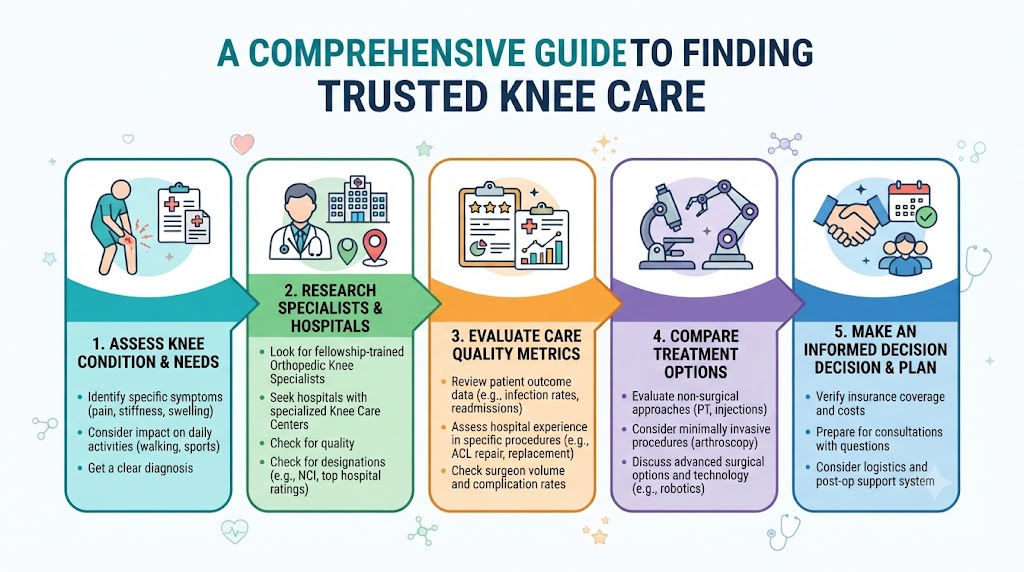
How to Find the Right Knee Hospital
When evaluating where to seek care, consider these factors:
- Specialist Experience: Look for surgeons or physicians who focus specifically on knee health and joint preservation.
- Hospital Facilities: Assess whether the hospital has dedicated orthopedic units and modern technology for both surgery and rehabilitation.
- Treatment Approach: Prioritize centers that focus on personalized planning rather than a one-size-fits-all approach.
- Patient Support: Consider the hospital’s ability to coordinate care, including communication with the patient and assistance with the logistics of recovery.
Knee Treatment Options
Non-Surgical Treatment
Many knee conditions are managed effectively without surgery. This may include:
- Physical therapy to strengthen supporting muscles.
- Medication management to reduce inflammation.
- Lifestyle adjustments to reduce joint stress.
Minimally Invasive Procedures
Arthroscopy allows specialists to visualize and treat internal knee issues through small incisions. This often leads to shorter hospital stays and a faster return to light activity.
Knee Replacement Surgery
When cartilage loss is severe and non-surgical options have been exhausted, replacement surgery may be considered. This procedure requires a specialized surgical team and a structured approach to rehabilitation.
Diagnosis Process for Knee Conditions
- Medical History: A review of symptoms, past injuries, and current activity levels provides the foundation for diagnosis.
- Physical Examination: The specialist assesses stability, range of motion, and signs of swelling or deformity.
- Imaging Tests: X-rays are typically the first step to assess bone health, while MRI scans offer detailed views of soft tissues like ligaments and the meniscus.
Recovery and Rehabilitation After Knee Treatment
Recovery is a gradual process. Physical therapy is the cornerstone of success, focusing on:
- Strengthening: Rebuilding the muscles around the knee to support the joint.
- Flexibility: Improving the range of motion to prevent stiffness.
- Functional Training: Learning to perform daily tasks safely as the joint heals.
- Follow-up Care: Regular check-ins with the specialist to monitor progress and adjust the recovery plan.
Factors That Influence Knee Treatment Decisions
Treatment paths are never identical for every patient. Key influences include:
- The type and severity of the injury or condition.
- The patient’s age and current activity level.
- General health and the presence of other medical conditions.
- The effectiveness of previous, conservative treatments.
Knee Care Comparison Table
| Factor | Importance |
| Specialist Expertise | Helps patients understand available orthopedic experience |
| Hospital Facilities | Supports diagnosis and treatment planning |
| Rehabilitation Support | Helps recovery and mobility improvement |
| Treatment Options | Provides suitable healthcare choices |
| Patient Support Services | Improves care experience |
Preparing for a Knee Specialist Consultation
Being prepared ensures that you make the most of your time with a specialist. Bring the following to your appointment:
- All relevant medical reports and notes.
- Copies of previous imaging results (CDs or films).
- A written list of current symptoms and when they occur.
- A list of all current medications and supplements.
- A list of specific questions you wish to ask the doctor.
- A record of your previous treatment history.
Common Mistakes Patients Make While Choosing Knee Care
- Ignoring Persistent Pain: Waiting too long to seek help can allow minor conditions to worsen.
- Prioritizing Cost Over Quality: While finances are important, the long-term success of the treatment should be the primary concern.
- Skipping Rehabilitation: Physical therapy is essential for recovery; skipping it can lead to poor outcomes.
- Relying on Unverified Information: Always consult reputable educational sources rather than anecdotal advice.
Myths vs Facts About Knee Care
| Myth | Fact |
| All knee problems require surgery | Many knee conditions may improve with appropriate non-surgical care |
| Knee replacement is only for older adults | Treatment decisions depend on individual healthcare needs |
| Recovery ends after knee surgery | Rehabilitation and follow-up are important |
| Any hospital can manage complex knee conditions | Specialized orthopedic care may be required |
Future of Knee Healthcare
The field of orthopedics is evolving rapidly with the introduction of:
- Robotic-assisted procedures that provide higher precision during surgery.
- Minimally invasive innovations that aim to reduce recovery times.
- Digital healthcare platforms that allow for better communication between patients and their care teams.
- Personalized planning tools that use data to tailor rehabilitation programs.
How KNEEHOSPITALS.COM Supports Knee Healthcare Awareness
KNEEHOSPITALS is dedicated to raising awareness about the importance of informed orthopedic decision-making. By providing a centralized source of educational content, the platform helps patients:
- Understand the nuances of different knee conditions.
- Recognize the standards of quality in knee hospitals.
- Feel more comfortable navigating their treatment options.
- Identify the importance of expert-led care.
FAQs
- What are the common causes of knee pain?
Common causes include arthritis, ligament injuries, meniscus tears, and tendonitis. - How do I find trusted knee care?
Focus on facilities with specialized orthopedic teams and a transparent approach to patient education. - What conditions are treated by knee specialists?
They treat a wide range of issues including acute sports injuries, chronic degenerative arthritis, and structural defects. - When should I visit an orthopedic knee specialist?
Visit a specialist if you experience persistent pain, instability, or difficulty performing daily activities. - What factors should I consider when choosing a knee hospital?
Consider specialist expertise, diagnostic capabilities, rehabilitation services, and patient support resources. - What tests are used to diagnose knee problems?
Physical exams, X-rays, and MRI scans are the primary tools used for accurate diagnosis. - Are all knee problems treated with surgery?
No, many conditions are managed successfully through physical therapy and lifestyle modifications. - When is knee replacement considered?
It is typically considered when severe cartilage damage significantly impacts quality of life and other treatments have failed. - How long does knee treatment recovery take?
Recovery time varies based on the condition, the procedure performed, and individual patient healing rates. - What role does rehabilitation play after knee treatment?
Rehabilitation is crucial for restoring strength, mobility, and confidence in the joint. - How can patients prepare for a knee consultation?
Bring your medical history, imaging results, a list of symptoms, and prepared questions. - Why is specialist experience important in knee care?
Experience ensures accurate diagnosis and the most effective, evidence-based treatment planning. - What makes a knee hospital different from a general hospital?
Specialized knee hospitals focus exclusively on orthopedic care, often providing more refined protocols and experienced staff. - How can international patients find knee care options?
By researching centers that offer clear information and support services for patients traveling for care. - How does KNEEHOSPITALS.COM help patients find trusted knee care?
It provides educational resources and guides that help patients understand their options and the standards of quality care.
Final Thoughts
Taking control of your knee health is a proactive step toward maintaining your quality of life. By understanding your condition and seeking care from experienced professionals, you can explore the best treatment paths for your specific needs. Early diagnosis and a commitment to rehabilitation are often the keys to long-term joint health. We encourage you to visit KNEEHOSPITALS to explore further educational resources and learn more about how to navigate your options for trusted knee care.