Introduction
The digital publishing landscape has undergone a profound transformation over the past decade. Once dominated by heavily gated media conglomerates and complex content management systems, the internet now offers unprecedented freedom for creators to share their voices directly with the world. Today, independent publishing is not just an alternative option—it has become a cornerstone of modern digital media, empowering individuals to bypass traditional gatekeepers, establish direct relationships with their readers, and build lasting professional credibility.
For independent writers, bloggers, storytellers, students, and researchers, understanding how to navigate this evolving ecosystem is essential. The demand for authentic, thoughtful, and long-form content is higher than ever, yet writers often find themselves overwhelmed by the technical hurdles of web hosting, heavy plugins, and visually cluttered interfaces that distract from the core craft of writing.
This is where finding the right digital publishing ecosystem becomes crucial. A thoughtful, modern publishing space allows creators to focus entirely on their craft. Platforms like BlogAion exemplify this shift by offering a distraction-free blogging platform designed specifically to help creators publish stories online for free, establish a personal brand, and connect seamlessly with a global audience without needing any technical or coding expertise.
What is Modern Digital Publishing and Independent Blogging?
Definition and Core Concepts
Modern digital publishing refers to the process of creating, formatting, and distributing editorial content, creative prose, articles, and research across online networks. Unlike traditional print media, digital publishing is dynamic, interactive, and globally accessible within seconds. Independent blogging sits at the heart of this movement, acting as a personal publishing platform where individuals retain complete ownership and creative control over their work.
Real-World Relevance
In today’s information-driven economy, having a dedicated digital home is vital. Whether you are an essayist publishing creative writing online, a journalist investigating niche topics, or a professional sharing industry insights, a personal blog acts as your permanent anchor on the web. It serves as a central hub that outlasts shifting social media algorithms and ephemeral trends.
Practical Examples
Consider a freelance researcher who publishes weekly deep-dives into environmental science, or a fiction author serializing short stories on a free platform for storytellers. Both utilize a blog publishing platform to curate their archives, build a loyal readership, and present their body of work in a clean, professional format.
Why is Digital Publishing Important for Writers and Storytellers?
Independent Publishing and Creative Freedom
When you rely entirely on third-party social networks or commercial platforms to host your thoughts, you are subject to sudden algorithm changes, monetization shifts, and strict platform rules. Independent publishing ensures that your archive remains yours. It provides total creative freedom regarding your tone, formatting, and publishing schedule.
Personal Branding and Professional Credibility
Your digital footprint defines how the world perceives your expertise. Consistently publishing well-researched articles or engaging creative prose builds immense professional credibility. For hiring managers, clients, and publishers, an active, well-maintained blog serves as definitive proof of your capability, dedication, and thought leadership.
Long-Term Discoverability and Knowledge Sharing
Unlike social media posts that vanish into feeds within hours, properly structured long-form articles remain discoverable via search engines for years. This evergreen discoverability allows your knowledge and stories to reach new readers long after their initial publication date.
Key Benefits of Publishing on a Minimalist Blogging Platform
Transitioning to a clean, focused publishing environment unlocks numerous distinct advantages for modern creators:
- Permanent Online Presence: A dedicated blog gives you a permanent digital address on the internet, ensuring your portfolio remains accessible at all times.
- Better Content Organization: Unlike scattered social media threads, a blog allows you to categorize, tag, and structure your writings into cohesive archives and series.
- Audience Growth: By publishing valuable, reader-focused content, you naturally attract organic traffic from search engines and community directories.
- Digital Portfolio Development: Writers can instantly share their best work with prospective clients, editors, or academic peers through a clean portfolio link.
- Community Participation: Being part of a wider online writing community exposes your work to constructive feedback, peer collaboration, and engaged readers who genuinely appreciate long-form prose.
Who Should Learn About Digital Publishing?
The principles of digital publishing and modern blogging apply across a vast spectrum of disciplines:
- Independent Writers & Bloggers: Seeking a reliable space to share essays, opinions, and serialized pieces.
- Storytellers & Creative Writers: Looking for an online story publishing platform to share fiction, poetry, and creative nonfiction.
- Students & Researchers: Needing a structured place to document academic progress, literature reviews, and research summaries.
- Educators & Professionals: Utilizing a blogging platform for writers to share instructional guides, industry analysis, and pedagogical insights.
- Journalists & Freelancers: Maintaining an independent portfolio to showcase published clips and attract editorial commissions.
Step-by-Step Guide to Get Started with Digital Publishing
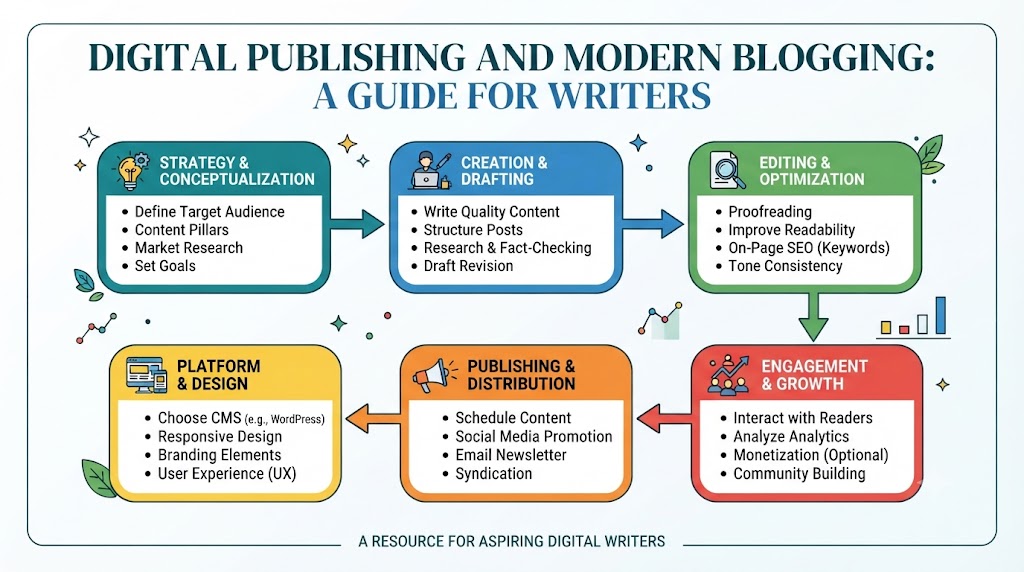
Launching your digital writing journey requires a clear, methodical roadmap. Follow these steps to set yourself up for long-term success:
- Understand Your Publishing Goals: Define whether your primary objective is personal expression, portfolio building, community engagement, or educational outreach.
- Choose the Right Blogging Platform: Select a reliable, distraction-free writing platform that eliminates technical clutter and lets you focus entirely on words. Platforms like BlogAion make it easy to start a blog for free with minimal setup.
- Secure Your Space: Claim your personal space, often utilizing a free blog with personal subdomain to establish an instant professional identity.
- Plan Quality Content: Outline your core topics, series ideas, or editorial themes before writing your first post.
- Publish Consistently: Establish a realistic writing cadence that you can maintain without burning out.
- Engage with Readers: Respond to comments, participate in community discussions, and welcome constructive feedback.
- Refine and Grow: Analyze what resonates with your audience and continuously improve your writing style and structure.
Best Practices for Long-Form Writing and Publishing
To ensure your content resonates with readers and performs well over time, adhere to these foundational practices:
- Prioritize Readability: Use clean headings, short paragraphs, and clear typography to make your long-form pieces easy to navigate.
- Maintain Originality: Write from your unique perspective and experiences. Authentic voice is the most valuable asset a writer possesses.
- Create Evergreen Resources: Focus on timeless topics that provide enduring value rather than chasing fleeting viral trends.
- Organize with Intent: Group related articles into logical categories so readers can easily explore your complete archive.
- Foster Engagement: Encourage thoughtful discussions at the end of your pieces to build a warm, interactive community of readers.
Common Mistakes to Avoid
Even experienced writers can stumble when navigating digital publishing. Watch out for these common pitfalls:
- Inconsistent Publishing: Publishing five posts in one week and then disappearing for six months disrupts audience retention. Solution: Build a flexible content calendar and stockpile drafts ahead of time.
- Overcomplicating the Tech Stack: Spending weeks configuring complex website themes instead of writing. Solution: Use an intuitive, simple blogging platform that handles the technical background automatically.
- Ignoring Reader Experience: Publishing dense walls of text without proper formatting or spacing. Solution: Break up text with descriptive subheadings and maintain a clean visual layout, utilizing light and dark reading modes where available.
- Keyword Stuffing: Forcing unnatural phrases into sentences solely for search engine algorithms. Solution: Write naturally for humans first; search engine optimization will follow naturally.
Practical Use Cases
Digital publishing platforms serve diverse needs across the modern knowledge landscape:
- Personal Essays & Memoirs: Writers use minimalist interfaces to publish reflective personal essays without visual distractions.
- Collaborative Research Journals: Academic groups utilize a multi-author blogging platform to pool research notes and publish joint findings.
- Literary Magazines: Editors leverage collaborative blogging platform features to curate fiction, poetry, and reviews from multiple contributing authors.
- Corporate Thought Leadership: Teams publish insightful industry commentaries to establish authority and trust within their specific market sector.
Why BlogAion is a Practical Platform for Modern Writers
When looking for an environment that respects your time and your prose, finding the right digital home matters. BlogAion is built from the ground up to support creators who value substance over flashiness.
As a free blogging platform for writers, BlogAion provides a calm, distraction-free writing platform where creators can focus purely on storytelling and article development. Featuring a clean, minimalist blogging platform design, it removes the friction typically associated with web maintenance, requiring no coding required and zero hosting management headaches.
Writers can easily create a personal blog for free, complete with a free blog with personal subdomain, allowing them to establish an immediate, professional digital footprint. For those looking to collaborate, BlogAion functions seamlessly as a multi-author blogging platform and a community blogging platform, connecting independent voices to a broader global community for writers. With a responsive reading experience, thoughtful typography, and built-in light and dark reading modes, BlogAion offers a professional publishing workflow designed to nurture long-term writing success.
Tips for Long-Term Writing and Publishing Success
Building a sustainable writing career or vibrant personal blog is a marathon, not a sprint. Keep these guiding principles in mind:
- Establish a Daily Writing Habit: Even writing three hundred words a day compounds into substantial work over the course of a year.
- Protect Your Creative Focus: Designate specific times where you write away from notifications and digital noise.
- Cultivate Patience: Audience growth and domain authority take time. Focus on craft excellence above immediate metrics.
- Expand Your Digital Presence: Share your published articles across professional networks and writing circles to invite new readers into your ecosystem.
Frequently Asked Questions (FAQ)
1. What is a free blogging platform for writers?
A free blogging platform for writers is an online publishing service that allows creators to set up, format, and publish articles, essays, and stories on the web at no financial cost, often providing built-in hosting and clean reading interfaces.
2. How can I create a personal blog for free?
You can create a personal blog for free by signing up on an intuitive publishing service like BlogAion, claiming your personal subdomain, customizing your profile, and publishing your first article directly through your browser without needing any coding skills.
3. What is a distraction-free blogging platform?
A distraction-free blogging platform is a writing environment stripped of cluttered sidebars, heavy widgets, and complex site-building tools, allowing authors to focus entirely on drafting and formatting their text.
4. Why should writers use a personal publishing platform?
Using a personal publishing platform gives writers complete creative control, permanent content ownership, independent audience relationships, and a professional digital portfolio that remains unaffected by changing social media algorithms.
5. Can I publish stories online for free?
Yes, many modern writing platforms allow authors, fiction writers, and essayists to publish stories online for free and share them instantly with global readers and literary communities.
6. What is a multi-author blogging platform?
A multi-author blogging platform is a collaborative publishing space where multiple writers, guest contributors, or editorial teams can contribute articles, essays, and stories to a shared publication or community blog.
7. Do I need coding knowledge to start blogging?
No, modern blogging platforms are designed to be entirely no-code, handling technical hosting, responsive design, and formatting automatically so you can focus exclusively on writing.
8. How can BlogAion help independent writers?
BlogAion helps independent writers by providing a calm, minimalist publishing environment, personal subdomains, multi-author collaboration tools, and access to a supportive global community of storytellers.
9. How do I build an online writing portfolio?
You can build an online writing portfolio by consistently publishing your best articles, essays, or stories on a dedicated personal blog, organizing them into clear categories, and sharing your permanent blog link with prospective clients or editors.
10. Why is consistent publishing important?
Consistent publishing helps build a reliable writing habit, signals search engines that your site is active, keeps your audience engaged, and steadily expands your digital content archive over time.
Conclusion
The power to share your ideas, stories, and expertise with the world has never been more accessible. By embracing thoughtful digital publishing, independent writers can bypass the noise of traditional gatekeepers and build a permanent, professional home for their work. Success in online writing relies not on complex technology, but on consistent creation, authentic storytelling, and choosing a reliable, reader-focused publishing environment.