Introduction
Finding a mobile network code or identifying a telecom provider can feel confusing. When you need to check network details, operator names, or international codes, simple answers make a big difference. Mobile Country Codes, Mobile Network Codes, and Public Land Mobile Network details help apps and researchers understand how cellular systems work. This guide introduces eSIMGlobo and shows you how to use telecom directories and search tools to research network details with ease.
Understanding MCC and MNC Codes
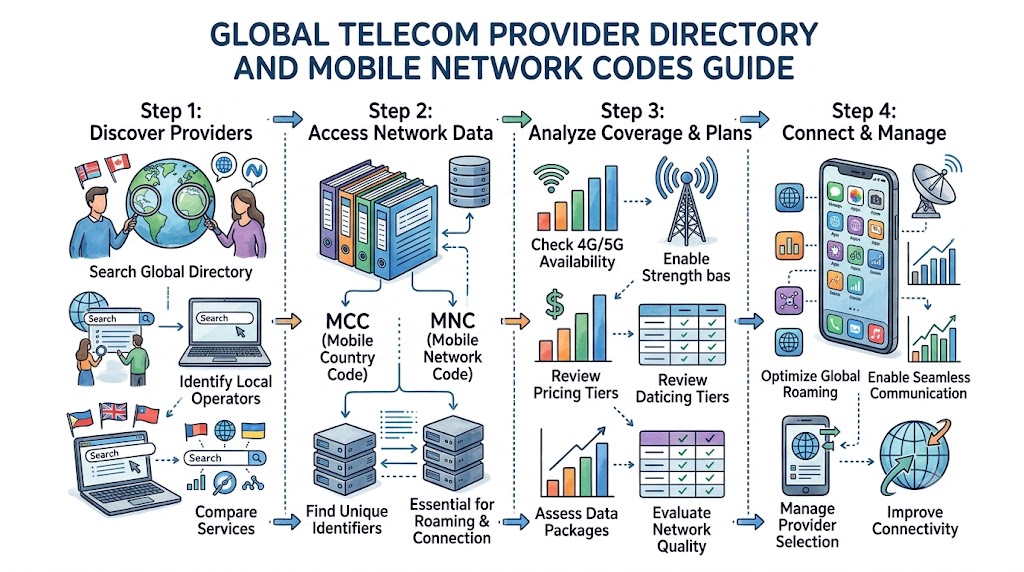
Mobile Country Codes and Mobile Network Codes are the core tools used to identify cellular networks. An MCC is a three-digit number that points to a specific country. An MNC is a two- or three-digit number that points to a specific network operator inside that country.
When you put these two numbers together, they create a single code for every mobile network. For example, in the United Kingdom, the MCC is 235, and an MNC like 27 identifies Vodafone UK. Developers and network teams use these numbers to route messages and read network signals.
PLMN Code Lookup and Its Purpose
A Public Land Mobile Network code joins the MCC and MNC into one longer number, like 23527. A PLMN code lookup helps you search this full number to find the company that holds the code.
However, finding a code only shows who owns the registered number. It does not mean the provider offers active signal or local coverage right now. Keeping this rule in mind helps avoid mistakes when reading network data.
Finding Mobile Network Codes by Country
Country lists help people look up mobile networks step by step. When you sort records by country, you can see every assigned network code inside a single border.
This helpful method makes it easy to study local mobile markets or verify local carrier numbers. Readers can use country pages to break big datasets into simple, smaller lists.
Using a Mobile Network Operator Directory
A mobile network operator directory lets users check carrier names, network codes, and related records in one clean place. These directories arrange complex network files into simple lists.
App builders and telecom researchers use these lists to check carrier details, confirm network numbers, and build tools that need accurate country and operator records.
Exploring a Global Telecom Provider Directory
Looking up providers across many countries requires a global telecom provider directory. This type of tool links regional data into one easy international hub.
Sites like eSIMGlobo offer simple, evidence-based directories built on official global standards. They let you search across hundreds of countries and thousands of network records without hassle.
| Term | Full Form | Simple Meaning | Main Purpose |
| MCC | Mobile Country Code | A 3-digit number for a country | Shows the country where a network lives |
| MNC | Mobile Network Code | A 2- or 3-digit number for a provider | Shows the specific operator in that country |
| PLMN | Public Land Mobile Network | The full MCC and MNC number combined | Identifies a mobile network worldwide |
Understanding a Telecom Operator Database
A telecom operator database holds records about code assignments, holder names, and system details. The quality of this data depends on clear sources and official checks.
Good databases separate active code assignments from old or unverified files. Keeping sources clear helps researchers trust the numbers they read.
Exploring an MVNO Directory
A Mobile Virtual Network Operator does not always build its own cell towers. Instead, an MVNO rents network space from a traditional Mobile Network Operator to sell plans under its own brand name.
Because of this setup, many MVNOs share host network resources and may not hold a separate MCC or MNC number. An MVNO directory helps explain these shared setups.
Finding Providers Through an eSIM Provider Directory
An eSIM provider directory focuses on companies that sell digital SIM profiles for international travel and remote data. It helps to know the difference between network owners, virtual operators, and digital plan sellers.
While network lists track core code assignments, eSIM directories highlight consumer travel brands and online profile services.
Understanding an MCC MNC Lookup API
An application programming interface lets two software systems talk to each other automatically. An MCC MNC lookup API lets mobile apps and tech tools search network codes without manual work.
Developers use these simple tools to pull carrier names and network details straight into their own apps.
| Lookup Need | What It Is | What It Helps Users Do |
| Country Searches | Filtering records by nation | Pick out and review local mobile markets |
| PLMN Lookups | Searching combined network codes | Find the holder of a full network number |
| Operator Directories | Reading carrier name lists | Check network codes and carrier details |
| MVNO Research | Reviewing virtual operators | Learn how shared networks work |
| eSIM Provider Research | Checking digital SIM stores | Compare travel data plan choices |
| API Lookups | Automatic software searches | Add quick code checks into app tools |
Common Uses of Mobile Network Codes
Network codes help people complete many everyday tech tasks. Common uses include:
- Reading network signals and system details
- Carrying out mobile industry research
- Checking user data on sign-up forms
- Testing international roaming routes
- Building and testing mobile phone apps
Even so, users should remember that network numbers show assigned code records rather than live signal strength or tower coverage.
Common Lookup Mistakes
People often make quick errors when looking up network codes. Common mistakes include:
- Flipping MCC and MNC positions by accident
- Typing incomplete numbers that fail to match
- Reading old records without checking fresh sources
- Thinking every code holder sells plans to everyday buyers
- Missing shared network setups between two brands
Watching out for these simple mix-ups keeps your research clear and accurate.
How eSIMGlobo Helps With Telecom Research
eSIMGlobo offers an independent, evidence-based directory of mobile network providers around the world. Built on official international network code files, the site helps users check thousands of records across many countries.
The platform clearly separates assigned codes from retail roles, keeping things plain when brand details are still unknown. Readers can use eSIMGlobo to check global provider data with complete confidence.
Frequently Asked Questions
What Is an MCC MNC Lookup?
An MCC MNC lookup is a quick search to find a mobile carrier name using its unique country and network code numbers.
What Is the Difference Between MCC and MNC?
An MCC points to the country of the network, while an MNC points to the specific operator inside that country.
What Does a PLMN Code Identify?
A PLMN code joins the Mobile Country Code and Mobile Network Code to mark a specific cell network anywhere in the world.
How Can I Find Mobile Network Codes by Country?
You can view codes by country using a network directory that lets you sort and filter records by geographic region.
What Does a Mobile Network Operator Directory Show?
A mobile network operator directory lists carrier names, assigned code numbers, code holders, and related network details.
Does Every Telecom Provider Have Its Own MCC and MNC?
No, not every provider gets a unique code. Some virtual brands share host network numbers or work on shared assignments.
What Is the Difference Between an MNO and an MVNO?
An MNO owns real cell towers and hardware, while an MVNO leases network space from an MNO to offer consumer plans.
How Is an eSIM Provider Directory Different From a Telecom Operator Database?
An eSIM directory lists travel data and digital profile sellers, while a telecom database tracks official network code assignments.
What Is an MCC MNC Lookup API Used For?
An MCC MNC lookup API helps app developers automate code checks and fetch network details inside their own software.
Why Should I Verify Network-Code Records?
Verifying records helps you rely on fresh, true information instead of old code lists or unverified guesses.
Conclusion
Understanding mobile country codes, network codes, and PLMN numbers makes telecom research simple. Country lists, operator directories, and lookup APIs help you identify global carriers without stress.
Keep in mind that code files only show official code holders and do not promise active cell coverage. Platforms like eSIMGlobo provide clear, evidence-led directories so you can explore global network data easily. Start your research today by exploring verified telecom records online.