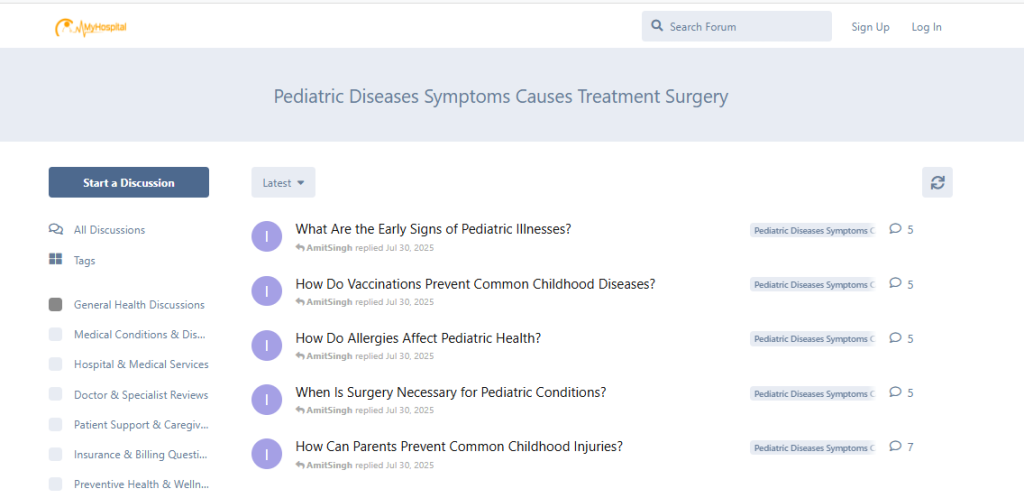
Child health is one of the most sensitive and rapidly evolving areas of medicine — from infections and nutritional disorders to congenital conditions and pediatric surgeries — affecting millions of children every year. The greatest risk is not always the disease itself, but delayed diagnosis and ignoring early symptoms. Many childhood conditions begin with mild signs that parents overlook until complications develop. This comprehensive medical guide helps you understand symptoms, causes, treatments, surgical options, and recovery planning using real patient discussions from the Pediatric Diseases Forum and trusted child-health guidance available through MyHospitalNow healthcare platform. From early detection to advanced pediatric treatment and long-term recovery, this tutorial empowers parents and families to make informed decisions for their child’s health.
Pediatric diseases include medical conditions affecting infants, children, and adolescents. Children’s bodies are still developing, so early diagnosis and proper care are essential to ensure healthy growth and prevent long-term complications.
This guide is designed for:
- Parents seeking clear medical understanding
- Families supporting child recovery
- Individuals researching pediatric treatment options
- Professionals exploring child healthcare pathways
Why Pediatric Diseases Are Often Detected Late
Children may not always communicate symptoms clearly, making early diagnosis challenging.
Common reasons for delay:
- Symptoms mistaken for minor illness
- Children unable to describe discomfort
- Delayed medical consultation
- Lack of awareness about warning signs
- Fear of pediatric procedures
Early detection improves treatment success and protects long-term development.
Real Patient Story — Early Care Prevented Serious Complications
A young child developed persistent fever and fatigue. Initially assumed to be a minor infection, symptoms worsened. Medical evaluation revealed a serious bacterial infection requiring treatment. Early intervention prevented complications and ensured full recovery.
Lesson: Persistent symptoms in children should never be ignored.
Common Pediatric Diseases
Respiratory Infections
Includes cold, flu, pneumonia, and bronchitis.
Symptoms:
- Fever
- Cough
- Breathing difficulty
- Fatigue
Treatment:
- Medication and supportive care
- Hydration and rest
- Hospital care in severe cases
Gastrointestinal Disorders
Includes diarrhea, vomiting, and digestive infections.
Symptoms:
- Loose stools
- Vomiting
- Abdominal pain
- Dehydration
Treatment:
- Hydration therapy
- Medication
- Nutritional care
Nutritional Deficiencies
Common in growing children.
Symptoms:
- Weakness
- Delayed growth
- Poor immunity
Treatment:
- Balanced diet
- Supplements
- Nutritional monitoring
Childhood Allergies and Asthma
Common chronic pediatric conditions.
Symptoms:
- Wheezing
- Breathing difficulty
- Skin rash
- Sneezing
Treatment:
- Allergy management
- Medication
- Lifestyle and environmental control
Congenital Disorders (Birth Conditions)
Conditions present from birth affecting organs or development.
Examples:
- Heart defects
- Genetic disorders
- Developmental delays
Treatment:
- Medical monitoring
- Corrective surgery in some cases
- Rehabilitation and therapy
Pediatric Infections
Includes viral, bacterial, and parasitic infections.
Symptoms:
- Fever
- Weakness
- Swelling
- Infection signs
Treatment:
- Medication
- Vaccination prevention
- Medical supervision
Pediatric Surgical Conditions
Some children require surgery for:
- Hernia
- Appendicitis
- Congenital defects
- Obstructions
Modern pediatric surgery is safe with good recovery outcomes.
Causes of Pediatric Diseases
Pediatric conditions may arise from:
- Infection
- Nutritional deficiency
- Genetic factors
- Environmental exposure
- Weak immunity
- Allergies
- Congenital abnormalities
Understanding causes helps guide proper treatment.
Modern Diagnostic Methods
Pediatric diagnosis includes:
- Physical examination
- Laboratory testing
- Imaging (X-ray, ultrasound)
- Developmental assessment
- Genetic testing in selected cases
Early diagnosis improves treatment success.
Treatment Options
Non-Surgical Treatment
- Medication
- Nutritional support
- Vaccination and prevention
- Monitoring growth and development
Pediatric Surgical Treatment
Required for:
- Congenital defects
- Appendicitis
- Hernia
- Obstructions
Modern pediatric surgery is safe and effective.
Case Study — Recovery After Pediatric Surgery
A child diagnosed with congenital hernia underwent timely surgical correction. With proper postoperative care and monitoring, the child recovered fully and resumed normal growth and activity.
Takeaway: Early diagnosis and safe surgery improve long-term outcomes.
Prevention and Child Health Protection
Healthy habits support child development:
- Ensure vaccination schedule
- Balanced nutrition
- Maintain hygiene
- Monitor growth and development
- Encourage physical activity
- Regular pediatric checkups
Prevention reduces risk of serious illness.
Warning Signs Parents Should Never Ignore
- Persistent fever
- Breathing difficulty
- Poor feeding
- Delayed growth
- Severe vomiting or diarrhea
- Unusual weakness
- Developmental delay
Seek medical care immediately for these symptoms.
Recovery and Long-Term Care
Recovery includes:
- Follow medical guidance
- Maintain nutrition and hydration
- Monitor development milestones
- Regular follow-ups
- Support emotional well-being
Long-term care ensures healthy growth.
Pediatric Care and Medical Tourism
Families seek pediatric care globally for:
- Congenital defect correction
- Pediatric surgery
- Advanced diagnosis
- Specialized child healthcare
Reasons:
- Advanced technology
- Experienced pediatric specialists
- Faster treatment
- Better recovery support
Frequently Asked Questions
- What are common pediatric diseases?
Respiratory infections, digestive issues, allergies, and infections. - When should parents seek medical help?
If symptoms persist, worsen, or affect child growth and behavior. - Are pediatric surgeries safe?
Modern pediatric surgeries are safe with good outcomes. - Can childhood diseases affect long-term health?
Yes, early treatment prevents complications. - How important is vaccination?
Vaccination protects against serious diseases. - Can nutrition affect child health?
Yes, nutrition is essential for growth and immunity. - How long does recovery take?
Depends on condition and treatment. - Can congenital disorders be treated?
Many conditions are treatable with early care. - How to improve child immunity?
Balanced diet, hygiene, vaccination, and activity. - Why is early diagnosis important?
It protects long-term growth and prevents complications.
Final Message — Protect Your Child’s Health, Protect Their Future
Children depend on early care, proper diagnosis, and preventive health practices. With timely treatment and modern pediatric care, most childhood diseases can be managed effectively. Never ignore persistent symptoms in children. Early action ensures healthy growth, strong development, and a better future.