Introduction
Keeping software systems running without a hitch while pushing out new updates can feel like chasing a moving target. Many companies trip up over clunky deployments, invisible bottlenecks, and the sheer headache of managing modern cloud environments. That is where Cotocus steps in, offering practical guidance to help organizations organize their software delivery and infrastructure management. This article breaks down how professional engineering services make it easier to build, scale, and secure digital platforms.
Why Businesses Need DevOps Consulting Services
When the people writing the code and the people running the servers live in separate worlds, miscommunication is bound to happen. That gap usually results in delayed releases and stressful deployment days. DevOps Consulting Services help organizations tear down those walls by fostering teamwork and introducing smart automation. Instead of relying on manual checklists, teams learn to use automated pipelines that test and build software consistently.
Looking closely at current workflows helps companies spot where things slow down and apply the right fixes. Bringing engineering and operations together means fewer surprises when pushing updates live. It turns a chaotic release cycle into a predictable, steady rhythm that everyone can follow comfortably.
How Managed DevOps Services Support Modern Engineering Teams
Writing new features takes up most of an engineering team’s bandwidth, leaving very little time to tinker with servers and monitoring tools. Managed DevOps Services step in to shoulder that operational load. This type of ongoing support covers everything from managing cloud infrastructure to keeping deployment pipelines running smoothly around the clock.
When external specialists take care of the background plumbing, internal developers can stay laser-focused on building great products for their users. It is an ideal setup for growing organizations that need reliable technical muscle without expanding their permanent headcount. Choosing this route simply depends on how much hands-on help your internal team needs to keep things stable.
Understanding the Role of Cloud Consulting Services
Transitioning to the cloud sounds like a great idea until you stare at a blank architectural whiteboard with zero direction. Cloud Consulting Services give businesses a clear roadmap for designing infrastructure that actually matches their workload demands. Consultants help sort through resource planning, cost management, and security setups before a single line of configuration is written.
Proper planning keeps your monthly hosting bills from ballooning out of control and prevents performance hiccups down the road. Every business operates differently, which means cloud strategies should always match real operational goals rather than following a generic template.
How Cloud Migration Services Help Businesses Move to the Cloud
Packing up physical office servers and moving everything over to a cloud platform is a major operational shift. Cloud Migration Services guide teams carefully through the planning, testing, and execution phases of the move. If you do not map out how different applications talk to each other beforehand, you risk running into unexpected downtime and security blind spots.
A well-managed migration protects system stability while workloads change homes. Taking the time to audit your existing environment before making the leap ensures the entire transition goes off without a hitch.
Kubernetes Consulting Services for Containerized Applications
As applications grow, developers often bundle them into containers to make them easier to run across different computers. But once you have dozens or hundreds of these containers floating around, keeping track of them becomes a full-time job. Kubernetes Consulting Services help businesses tame that complexity by setting up automated container management.
Kubernetes handles the heavy lifting of scaling apps up or down and keeping them online if a server drops. Even so, it adds its own layer of technical overhead, meaning companies should evaluate whether container orchestration actually fits their current software before jumping in. With proper guidance, teams can configure these environments to run efficiently.
Why DevSecOps Consulting Services Matter for Software Security
Waiting until the final testing phase to check for security flaws is a risky gamble that usually slows everything down. DevSecOps Consulting Services bake safety checks directly into the everyday software development workflow. This means security practices are considered right from the start, rather than tacked on at the very end.
Automating security scans inside your deployment pipelines lets you catch vulnerabilities early without putting the brakes on feature releases. Protecting your applications becomes a natural part of daily operations, helping your team build safer software with total peace of mind.
How SRE Consulting Services Support System Reliability
When systems crash or slow to a crawl, user trust takes an immediate hit. SRE Consulting Services bring a structured, software-driven approach to keeping digital services up and running. By setting clear reliability targets and improving observability, teams can spot trouble spots before they turn into major outages.
While zero downtime is a myth, Site Reliability Engineering practices help organizations respond to incidents quickly and minimize user disruption. Good reliability strategies keep everyone aligned on what system health actually looks like for the business.
Platform Engineering Consulting Services for Better Developer Experience
Developers lose a surprising amount of time wrestling with inconsistent tools and messy internal environments. Platform Engineering Consulting Services help organizations build centralized internal platforms equipped with standardized workflows and self-service infrastructure.
When engineers have quick access to the right tools without jumping through administrative hoops, they spend more time writing code and less time fighting setup issues. Designing these internal spaces around the daily habits of your team makes a massive difference in overall productivity.
When Businesses Consider DevOps Outsourcing Services
Finding and hiring experienced DevOps talent locally can feel nearly impossible given current market demands. DevOps Outsourcing Services give companies instant access to external engineering experts who can step in and handle automation, cloud setup, and infrastructure scaling.
This model works wonders for growing businesses facing tight deadlines or sudden scaling hurdles. Outsourcing lets you tap into specialized skills right when you need them, without the long timeline of traditional recruiting.
Why Corporate DevOps Training Is Important for Teams
Tools and best practices shift constantly, which means internal engineering teams need continuous opportunities to sharpen their skills. Corporate DevOps Training gives employees hands-on exposure to modern automation concepts, cloud workflows, and collaboration tactics.
Structured learning bridges the gap between what team members already know and what the business needs them to do. A well-trained crew handles troubleshooting faster, collaborates more naturally, and takes full ownership of their technical stack.
DevOps and Cloud Services Comparison
| Service | Main Focus | How It Can Help |
| DevOps Consulting | Improving development and operations processes | Helps organizations understand suitable DevOps practices |
| Managed DevOps | Ongoing DevOps support | Supports infrastructure, automation, and operations |
| Cloud Consulting | Cloud planning and architecture | Helps businesses evaluate cloud requirements |
| Cloud Migration | Moving workloads and applications | Supports migration planning and implementation |
| Kubernetes Consulting | Managing containerized applications | Helps teams understand Kubernetes environments |
| DevSecOps Consulting | Integrating security into workflows | Supports security practices across development and operations |
| SRE Consulting | System reliability and operations | Helps improve monitoring and reliability practices |
| Platform Engineering | Internal engineering platforms | Supports standardized tools and developer workflows |
| DevOps Outsourcing | External DevOps expertise | Provides additional technical support |
| Corporate DevOps Training | Team learning and skills | Helps teams understand modern DevOps practices |
How to Choose the Right DevOps and Cloud Services Partner
Picking the right technical partner is a decision that shapes your product’s future. Start by looking closely at your current bottlenecks and defining what you want to achieve. Look for a partner who has proven experience across cloud systems, security, and automation.
A great partner will listen carefully to your goals rather than trying to sell you trendy tech you do not need. Transparent communication, clear support models, and a focus on empowering your staff are the true markers of a trustworthy collaboration.
How Cotocus Brings DevOps and Engineering Services Together
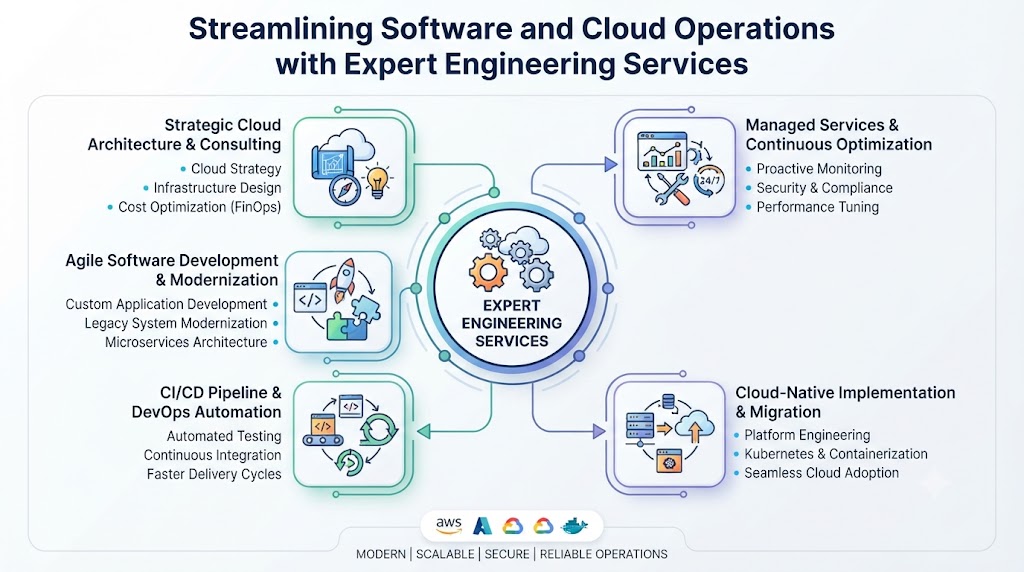
Cotocus offers a wide array of technology services tailored to support organizations navigating modern software challenges. Businesses can tap into DevOps Consulting Services to refine deployment pipelines or rely on Managed DevOps Services for continuous operational backup. For cloud initiatives, Cotocus provides Cloud Consulting Services and Cloud Migration Services to make infrastructure transitions smooth.
Teams dealing with containerized apps can lean on Kubernetes Consulting Services, while security-focused groups benefit from DevSecOps Consulting Services. Furthermore, Cotocus supports system stability through SRE Consulting Services and boosts developer output via Platform Engineering Consulting Services. Organizations can also utilize DevOps Outsourcing Services for extra bandwidth or Corporate DevOps Training to upskill their internal engineering groups. Having access to this full spectrum of services ensures support is always close at hand.
Common DevOps and Cloud Challenges Businesses Should Avoid
Companies often stumble over the same few roadblocks when trying to modernize their tech stacks. Relying on manual scripts instead of automation almost always leads to human error during deployments. Poor communication between departments creates friction and stalls progress.
Jumping blindly into complex tools like Kubernetes or rushing a cloud migration without a solid strategy usually results in confusion rather than efficiency. Avoiding these pitfalls takes patience, clear documentation, and a willingness to improve processes gradually.
Simple Tips for Better DevOps and Cloud Operations
Improving your technical workflow does not require a complete overhaul overnight. Start by tackling your most annoying deployment bottlenecks and automating repetitive tasks first. Encourage your developers and operations staff to talk openly and share goals.
Keep your infrastructure documented so team members are never left guessing how things work. Review security settings regularly, plan cloud updates ahead of time, and always tie your technology choices back to actual business needs.
Frequently Asked Questions — Primary FAQs
What are DevOps Consulting Services?
DevOps consulting services evaluate how your team delivers software and help implement automation and collaboration strategies to bridge the gap between developers and IT staff.
How do Managed DevOps Services work?
Managed DevOps services offer continuous hands-on assistance for infrastructure management, deployment pipelines, and operational monitoring, freeing up your internal team.
What is the purpose of Cloud Consulting Services?
Cloud consulting helps organizations analyze cloud options, design suitable architecture, and plan resource allocation to match exact business objectives.
What happens during Cloud Migration Services?
Cloud migration services guide teams through the planning, testing, and physical transfer of applications and data over to modern cloud environments safely.
When should a business use Kubernetes Consulting Services?
Companies use Kubernetes consulting when managing containerized applications becomes too complex and they need expert help with orchestration and scaling.
What is included in DevSecOps Consulting Services?
DevSecOps consulting integrates automated security checks directly into development and deployment workflows to catch vulnerabilities early.
How do SRE Consulting Services improve systems?
SRE consulting helps organizations establish clear reliability goals, improve monitoring, and handle incident responses more effectively.
What are Platform Engineering Consulting Services?
Platform engineering consulting helps build internal developer platforms that provide standardized tools and self-service infrastructure access.
When should a company consider DevOps Outsourcing Services?
A company looks into DevOps outsourcing when it needs external technical expertise or extra engineering bandwidth without permanent hiring commitments.
What does Corporate DevOps Training cover?
Corporate DevOps training teaches internal teams modern automation concepts, cloud technologies, and collaborative engineering workflows.
How does Cotocus support modern engineering teams?
Cotocus provides end-to-end support across DevOps consulting, cloud migration, security integration, managed operations, and team training.
How do these services improve software delivery?
These services introduce automation, structured pipelines, and better cross-team communication, resulting in faster and more reliable software releases.
Frequently Asked Questions — Related FAQs
How can a business start its DevOps journey?
A business can start by identifying current deployment bottlenecks, automating repetitive tasks, and involving both engineering and operations teams in early planning.
What should companies evaluate before cloud migration?
Companies should check their application dependencies, security rules, and long-term workload needs to prevent unexpected cloud expenses.
Is Kubernetes necessary for every application?
No, simpler applications that do not require complex container orchestration do not need Kubernetes. Evaluate your specific needs first.
Why is automation important in modern software development?
Automation cuts down manual errors, speeds up repetitive testing, and gives engineering teams more time to focus on product features.
How can organizations improve software deployment speed?
Organizations can speed up deployments by setting up continuous integration pipelines and streamlining communication across departments.
What factors influence system reliability?
System reliability relies on proactive monitoring, resilient architecture, structured incident response, and consistent operational routines.
How does DevSecOps differ from traditional security?
DevSecOps weaves security into every stage of the development lifecycle rather than treating it as a final review checkpoint.
What should organizations look for in a DevOps training program?
Look for programs that match your team’s current skill level, cover practical automation tools, and address your specific workflow challenges.
Final Thoughts
Modernizing how you build and run software takes thoughtful planning, reliable automation, and strong teamwork. Organizations that embrace structured DevOps, cloud planning, security, and reliability practices are naturally better equipped to handle changing digital demands. Cotocus helps businesses bridge these gaps by offering comprehensive support across cloud migration, Kubernetes, security, and engineering workflows. Aligning the right technical strategies with a capable team lays down a solid foundation for long-term success.